
Executive Summary:
- Investment in a first-of-a-kind manufacturing facility in the EU may be supported with state aid.
- Investment in a first-of-a-kind facility can increase security of supply and reduce dependency on foreign sources and spur innovation.
Table of Contents:
- Introduction
- Funding gap
- Amount of aid
- Clawback mechanism
- Compatibility of the aid with the internal market
Introduction
Three years ago, the EU adopted the “Chips Act” [Regulation 2023/1781] whose purpose is to strengthen Europe’s semiconductor ecosystem. Since then, the European Commission has approved several state aid measures that incentivise investments in the manufacturing of semiconductors. A recent such measure is a German investment grant to “Element 3-5”, a small enterprise in North Rhine-Westphalia [see SA.119614].1
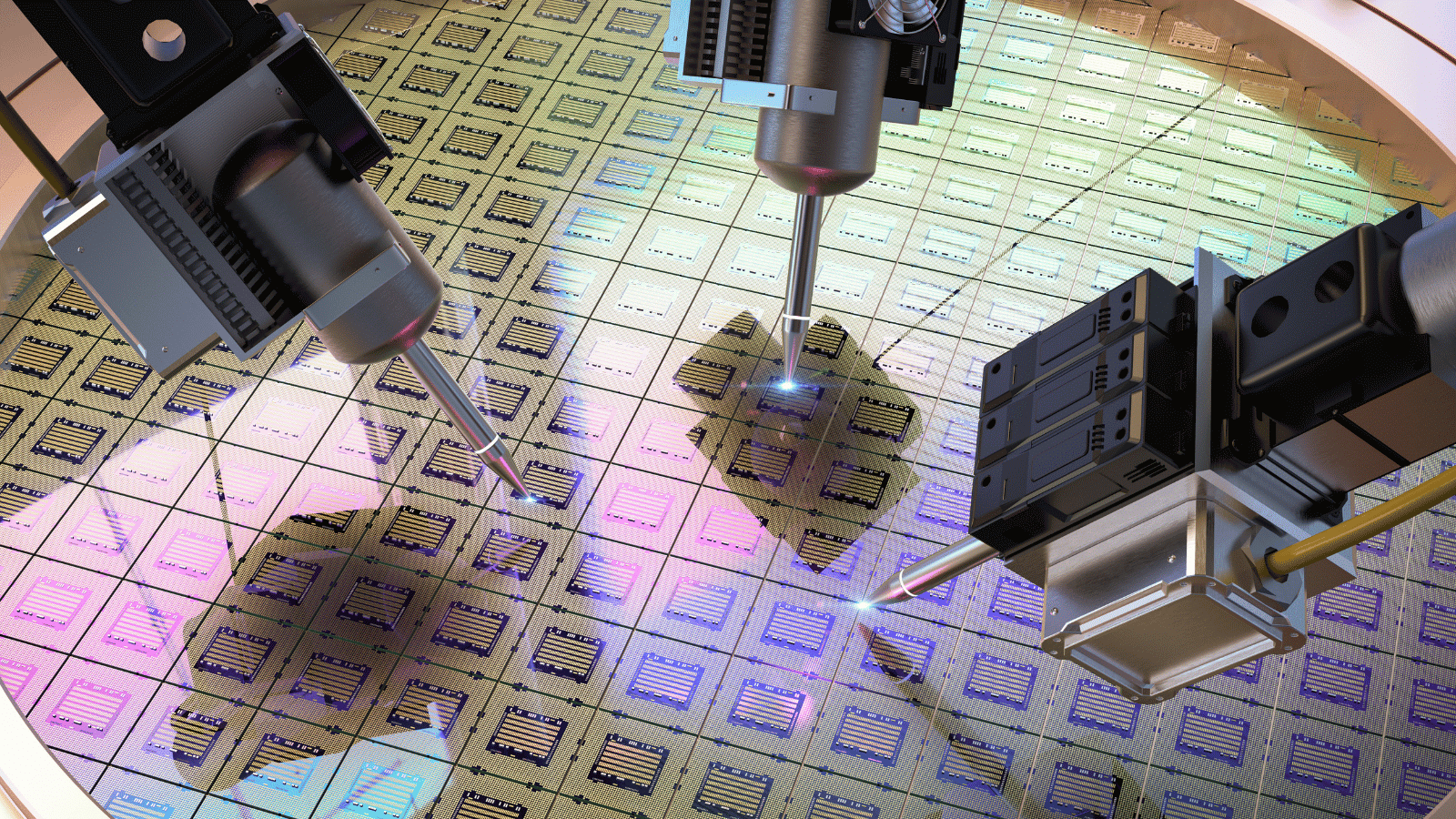
The objective of the measure is to support the integrated production of “epitaxial” wafers with a new, low temperature technology. These wafers are used for the manufacturing of microchips.
According to the Chips Act, any public support must be limited to products or processes which are “first-of-a-kind” in the EU, in terms of significant improvements, in comparison to what is currently available in the EU.
Element 3-5’s project is ambitious. The company itself was established only in 2010 and in 2025 its total revenue was less than EUR 0.5 million. Its market share in the wafers in question is currently zero. Yet, it expects to gain a global market share of 22% by 2032 or 28% of the market in the EEA. At present the main suppliers on a global scale are both American [Wolfspeed and Coherent], with combined world market share of 55%-65%. They are expected to remain the main competitors of Element 3-5 in 2032.
Funding gap
State aid must always have an incentive effect. The presence of incentive effect is shown by credible financial calculations of the gap between the initial investment costs and the expected future stream of net revenue over the life of the project or between the net present value of the project and the net present value of a counterfactual project.
In this case the funding gap was the difference between the financial results of the factual project in Germany and those of a counterfactual project outside the EU. The funding gap was EUR 296.25 million, in discounted terms. The precise net present value of the two scenarios was a business secret and only the range of EUR 4.0-4.5 billion was shown in the Commission decision. Taking into account this range of values, the funding gap of EUR 296.25 million was between 6.6% and 7.4% of the expected financial performance of the project over the ten-year period 2026-2035. The discounting was based on the beneficiary’s own WACC of 11.67%.
The investment would have an economic life after 2035, but its performance after 2035 was encapsulated in an estimated “terminal value” at the end of 2035 on the basis of the so-called Gordon formula. The terminal value of the project was between EUR 6000-6500 million in either scenario. The Gordon formula is expressed as CF(1+g)/(WACC-g), where CF is the constant cashflow, and g is the assumed growth rate. In this case g was zero. Therefore, the terminal value of the project was CF/WACC. This implies that the expected cashflow over the economic life of the project must have exceeded EUR 50 billion.
In the factual scenario, the capital investment was EUR 320.39 million. In the counterfactual scenario, the capital costs were about 2% lower than in Germany, primarily due to lower construction costs.
In relation to operating costs, the alternative location outside the EU had a cost advantage in terms of lower energy and wastewater expenses. The alternative location also had a significant cost advantage in terms of labour costs to the tune of 30%-35% in relation to the corresponding costs in Germany.
The revenue generated by manufacturing at the alternative location would also be lower because of lower production yield during the first years of production. The cause of the lower yield was expected to be the initial unavailability of workers with the necessary skills, which would necessitate extensive training.
Another advantage of the alternative location was the lower income tax and other taxes in comparison to taxes in Germany.
Amount of aid
In order to cover a financial gap of EUR 296.25 million [in 2026 prices], Element 3-5 requested state aid of EUR 294.01 million, in discounted terms, which is marginal less than the funding gap. In nominal terms, the amount of state aid was EUR 353.05 million. The difference is due to the fact that the aid would be disbursed in instalments as the project progressed to completion.
Clawback mechanism
When Member States notify projects of this kind, the Commission requests the adoption of safeguards in form of clawback mechanisms to ensure the proportionality of state aid if and as market conditions change.
As explained in the Commission decision, “(57) the claw-back mechanism will be based on actual ex-post financial data, which will be annually approved by an independent auditor. For this purpose, separate analytical accounting will be required from the beneficiary for the project to ensure traceability of the project’s cashflows and allocation of State aid.”
“(58) At least every two years, starting in 2029 and until at least 2035, test runs will be held to verify whether the project realised additional gains that were not forecasted. Each test run will be completed no later than six months following the end of the respective test run period.”
“(59) In each test run, a Surplusi for the year i (with i standing for the last completed calendar year of the test run period) will be calculated as the difference (positive or negative) of:
(a) the NPV, interest-adjusted to the year i (using the notified WACC as the compounding rate), of the actual ex-post audited post tax cashflows – including State aid instalments and additional public funding and excluding financing cashflows – and, in the case of the last test run, including a terminal value (‘actual NPV including aid’); and
(b) the NPV, interest-adjusted to the year i (using the notified WACC as the compounding rate), of the post-tax cashflows as projected at the time of notification – including planned State aid instalments and excluding financing cashflows – and, in case of the last test run, including the terminal value as projected at the time of the notification (‘projected NPV including aid’).”
“(60) The claw-back mechanism will only apply if Surplusi is positive.”
“(61) If Surplusi is positive, it will be multiplied by a progressive allocation ratio ShareState which is set at:
(a) 25% for the (first) part of the surplus which increases the actual NPV including aid to a level smaller than or equal to zero; and
(b) 50% for the (remaining) part of the surplus which increases the actual NPV including aid to a level above zero.”
“(62) The maximum repayment to Germany cannot exceed the amount of aid received under the measure, capitalised to the moment of the final test run.”
“(63) Germany will ensure that the amount resulting from the calculation set out in recital (61), at the final test run (44), will be paid by the beneficiary to Germany. If before the final test run a surplus arises, it must be covered by a letter of credit or a guarantee by a reputable financial institution or a parent company having an investment grade rating from a first-rank credit rating agency.
“(64) If the project at the moment of the final test run is characterised by an actual NPV including aid which is still negative, and the beneficiary can prove – on the basis of audited figures – that the repayment required under the claw-back mechanism would imply that it will become an undertaking in difficulty (45), then the repayment will not be triggered.”
Compatibility of the aid with the internal market
First, the Commission verified that the project was indeed first-of-a-kind facility in the EU. Indeed, there is currently no other producer of similar wafers in the EU.
Next, the Commission assessed the presence of an incentive effect. It accepted that the funding gap calculations were credible and that they proved that without the aid Element 3-5 would have chosen the alternative location outside the EU.
The Commission also confirmed the many positive effects of the project such as the impact on the semiconductor value chain, the impact on innovation, security of supply and improvement of labour skills.
Given that the aid did not exceed the funding gap, the Commission also found it to conform with the principle of proportionality.
By contrast to its positive effects, the possibly negative effects of the aid on trade and competition were considered to be limited. Element 3-5 would produce the wafers without the aid, but outside the EU. Therefore, the impact on the market was likely to be the same if aid were not granted. At any rate, it would not hurt other European companies since no comparable facility exists in the EU. In view of the fact that demand for semiconductors exceeds supply, additional production would more likely have a positive effect on the market. Taking into account the zero market share of Element 3-5, there was also little concern that the aid would enable it to acquire a dominant market position.
Therefore, the Commission approved the aid.