
Executive Summary:
- Compensation to undertakings that is not available under normal market conditions confers an advantage in the meaning of Article 107(1) TFEU.
- Compensation for damage caused by public authorities which bear liable under the general rules of liability in each Member State does not constitute state aid.
- Compensation can cover both loss of property and loss of income.
Table of Contents:
- Introduction
- Background
- State liability
- Compensation
- Envisaged compensation deviates from the “standard method”
- Methodology for estimating the compensation
- Commission assessment of the presence of state aid
- Compatibility
Introduction
Often Member States claim that the funding they grant to undertakings merely compensates them for risks [e.g. research, commercial, etc], handicaps [e.g. underdeveloped infrastructure, remoteness, etc] or damage [e.g. natural disasters, etc] and, therefore, it provides no real benefit. As EU courts and the Commission have held in a number of judgments and decisions, compensation is not considered to confer an advantage only in two instances: when the state is liable for damage it has caused and when the state offsets the net extra costs of public service obligations in conformity with the four “Altmark” conditions. Reduction of disadvantage is still an advantage in the meaning of Article 107(1) TFEU because it provides a benefit that is otherwise unavailable under normal market conditions, i.e. in the absence of state intervention.
Recently, the Commission authorised a Dutch scheme for the compensation of farmers who stopped cultivating land in the Dutch province of Friesland in order to allow the level of ground water to rise [SA.117964].1 This is one of the few cases were the Commission has concluded that compensation was partly non-aid.
Background
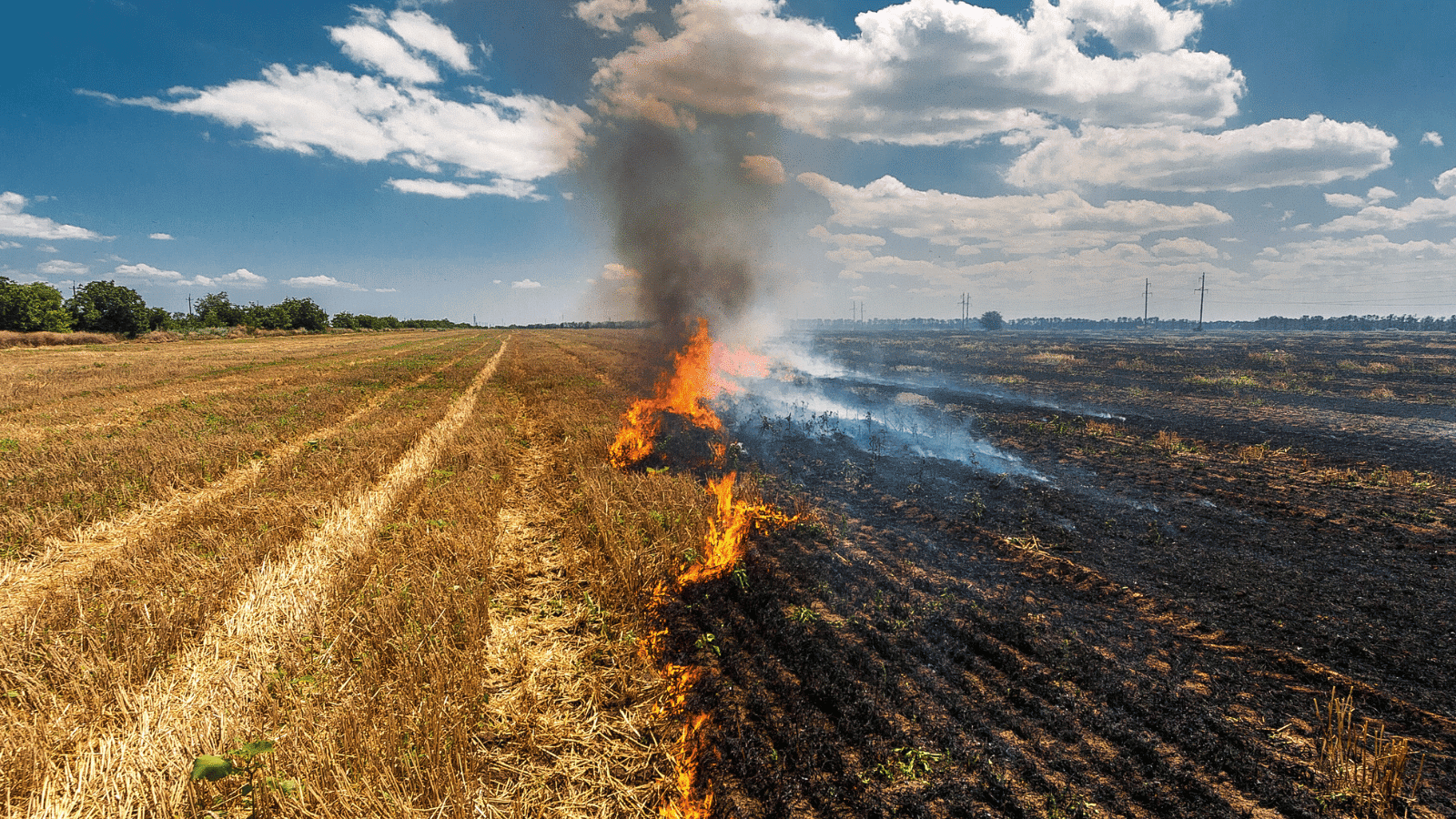
The Province of Friesland has 89 000 hectares of peatland. The groundwater level in peatland areas is lower than in other agricultural areas. Peat oxidises as soon as it comes into contact with air. This happens when drainage to increase yields lowers the water level. Drainage of peatlands and the associated oxidisation cause the emission of greenhouse gases, in particular 1.5 million tonnes of carbon dioxide [CO₂] on an annual basis. This is equal to 30% of the total CO₂-emissions in Friesland.
The purpose of the notified measure is to reduce the CO₂ emissions by raising the groundwater level in the relevant areas through a process of rewetting. The rewetting will affect farmers who will lose agricultural land and income.
As explained in the Commission decision “(8) agricultural lands would deteriorate in terms of both quality and quantity of crop yields, as a consequence of the (mandatory) rewetting. A lower crop yield would also translate into a lower milk yield in the case of an unchanged continuation of the business activities. The lower crop yield potential of the land reduces its value. Ultimately, the rewetting will result in damages for farmers with agricultural activities on the rewetted lands, in the form of property value losses (decrease of land value) and income losses, as well as for landowners who are leasing their land parcels to famers (tenants). Therefore, the Dutch authorities plan to provide a compensation to the affected farmers and landowners through additional land (as available) and/or a financial compensation.”
The decision also explains that “(9) the Dutch authorities consider that if compensation were to be provided only in monetary terms, there would be a risk that farmers would leave and that depopulation would occur in those peatland areas, with negative consequences for the social infrastructure and, therefore, the liveability in those areas. The combination of both land and financial compensation is aimed to provide farms with sufficient scale to maintain a sufficiently profitable farm, even in the event of lower land yields and more extensive use of the land.”
In other words, the state intervention could solve one problem [reduction of CO₂ emissions] but would create another one [depopulation].
State liability
At any rate, the Dutch authorities would be obliged to grant compensation. This is because “(10) based on Article 4:126(1) of the General Administrative Law Act, an administrative body (e.g. a water board), which causes damages in the rightful exercise of its public competencies or tasks, grants a compensation to a damaged party if the damage in question exceeds the NMR. Based on Article 15.1(1), point (a) of the Environment and Planning Act, the enactment of a level decree can be considered as a rightful exercise of Wetterskip as such, thus creating a situation for a compensation under Article 4:126(1) of the General Administrative Law Act.* In this context the Dutch authorities recall that, damages which the national authorities may be ordered to pay to individuals in compensation for damages they have caused to those individuals, do not constitute State aid.”
* At this point footnote 8 explains that “the Dutch authorities submit that damages caused by the planned level increase and the associated adjustments to the water system is substantial, structural and permanent in nature. In such cases, it is common practice in Dutch legal practice to determine compensation for losses on the basis of the same principles as for full compensation in the event of expropriation or unlawful conduct, but with the offsetting of a (limited) deduction due to the normal social risk (NMR) [normaal maatschappelijk risico].” The NMR is set at 2%.
For a better understanding of the Dutch legal context, the relevant provision in the General Administrative Law is as belows:
Article 4:126 of the General Administrative Law of 1992.
(1) If, in the lawful exercise of its powers or duties under public law, an administrative body causes damage that goes beyond the normal social risk and that affects an aggrieved party disproportionately more severely than others, the administrative body shall, upon request, award compensation to the aggrieved party.
(2) In any event, the applicant shall bear the cost of the damage in so far as:
- he has accepted the risk of the damage occurring;
- they could have limited the damage by taking measures, within reasonable limits, which could have prevented or reduced the damage;
- the damage is otherwise the result of a circumstance attributable to the applicant; or
- compensation for the damage is otherwise covered by insurance.
(3) If an event causing damage as referred to in the first paragraph has also resulted in a benefit for the injured party, this shall be taken into account when determining the amount of compensation to be paid.
(4) The administrative body may award compensation in a form other than the payment of a sum of money.
Compensation
The notified measure would establish an ex ante method for determining the compensation so that farmers would be fully aware of the amount/land that they would receive.
The compensation would cover loss of property value and income and would take into account additional land granted to farmers. This form of compensation would allow farms that remain active in the area to expand their land area and, in the event of reduced yields per area, to continue to operate at the same production volume and profitability.
The measure will remain in force until 31 December 2037 with an overall budget of EUR 20 million.
Envisaged compensation deviates from the “standard method”
The beneficiaries are owners of peatland with agricultural use and farmers active in the peatlands which are affected by the rewetting. More than 1000 beneficiaries are expected to benefit from the measure. Although participation in the measure is voluntary, farmers and landowners who do not opt to participate would have the possibility to seek compensation for damage resulting from the rewetting on the basis of the legal obligation of the Dutch state to compensate them. This would be the “regular compensation track” or the “standard method”. “(21) Under the standard method it is primarily the responsible public administration that determines the NMR percentage, which eventually will be established on a case-by-case basis by the Dutch courts if such NMR percentage is challenged/contested by the party who suffered the damage.”
“(22) The Dutch authorities state that all the assessment steps under the generally applicable damages compensation legislation will also be applicable under the notified scheme. However, the scheme will differ from the standard method in the sense that there is no double valuation of the damage [i.e. no valuation by independent experts] and a fixed NMR percentage of 2% will be applicable to all the potential beneficiaries who wish to participate in the scheme. The Dutch authorities submit that this percentage is normally applied in practice under the standard compensation method. However, this does not imply that it is a percentage which, in individual cases, would be the actual NMR set out by the relevant authority or eventually by the Dutch courts. The Dutch authorities mention that, in practice there have also been instances of courts referring to a 5% NMR. Therefore, the Dutch authorities submit that the use of a fixed NMR of 2% under the scheme, constitutes a lower NMR percentage than the one that would possibly be established by the relevant authority/or a court in individual cases. It is precisely this deviation what the Dutch authorities have notified as State aid and it concerns the scope of the scheme as notified to the Commission. The Dutch authorities recall that the damage compensation provided under the applicable national legal framework does not entail State aid”.
“(23) The compensation under the scheme will, to the extent possible, be in the form of additional (or replacement) land for the farmer and/or a financial (money) compensation. Where possible, the Dutch authorities prefer to offer a compensation of the property value losses with (equivalent) land rather than with money. This compensation in the form of land will obviously depend on the availability of such land.”
Methodology for estimating the compensation
The Dutch authorities indicated two situations regarding the form of compensation: “reconstruction” and “liquidation”.
Reconstruction: In this case, loss of property value would be compensated with an area of land such that the production capacity of the farm remains equal to the capacity before the rewetting. This would offset the damage. The size of additional land would depend on the land value and yield capacity after the rewetting and the necessary water system adjustments.
Liquidation: In this case, both loss of property value and income would be compensated with money, assuming that part of the existing production capacity would be reduced by the rewetting and the necessary adjustments to the water system.
Paragraphs 24-47 of the decision explain in detail the methodology adopted by the Dutch authorities for calculating the damage in terms of loss of land value, reduction of output and loss of income. The methodology also takes into account the value of the land that may be offered as alternative and its output. The maximum amount of compensation could not exceed the amount of damage.
Commission assessment of the presence of state aid
The most important issue in the Commission’s assessment was whether the compensation conferred a selective advantage to farmers. The Dutch authorities considered that the compensation that was calculated in accordance with the general rules on liability did not constitute state aid. Only the fixed lower rate of 2% of NMR was state aid, while the higher rate of 5% or any other rate determined according to the individual circumstance to each beneficiary was not. This is because a lower rate of NMR [i.e. normal or inherent risk] was deducted from the amount of compensation.
First, the Commission recalled that “(57) in the Netherlands, the conventional form of compensation for damages resulting from these kinds of public measures, finds its basis in Article 15.1 (1), point (a) of the Dutch Environment and Planning Act. This provision indicates that if a public authority, in the execution of its public competencies or tasks based on the Environment and Planning Act (thus a lawful conduct), causes damages, then the section on compensation for damages of the Dutch General Administrative Law Act is applicable to compensate damages caused by the enactment, amendment or revocation of such a public measure (i.e. a decree to raise groundwater levels). According to Article 4:126 (1) of the General Administrative Law Act only the damages that go beyond the NMR are compensated under this conventional form of compensation”.
“(58) Furthermore, …, under Article 2.41 of the Environment and Planning Act the water boards are authorized to establish decrees to change groundwater levels. Therefore, such a decree by the Wetterskip can be considered as a lawful conduct. Consequently, the water board has the legal obligation to compensate the damages caused by this conduct and the water board uses its (general) compensation regulation to effectuate this. The (general) compensation regulation of Wetterskip does not mention a fixed NMR percentage thus leaving discretion for them to determine this. However, in practice the water board follows external advice to determine the applicable NMR. As previously explained the amount of compensation and the NMR can be contested in court and corrected by the judge.”
“(59) The assessment steps under the national compensation legislation which are applicable in the situation of the conventional form of compensation, are identically applicable and mandatory under the pre-notified scheme. The Dutch authorities confirmed that, apart from the use of a fixed NMR and the objective valuation method, the standard legal framework regarding State liabilities is applied to the scheme in a consistent manner, in line with the standard practice of the water boards and the national case law.”
Then the Commission referred to the relevant EU case law. “(60) The CJEU confirmed in its Asteris judgment [C-106/87] that damages which the national authorities may be ordered to pay to individuals in compensation for damages they have caused to those individuals, do not constitute State aid. The Dutch conventional form of compensation follows the same principle of the Asteris judgment, in particular that compensation for such damages cannot be regarded as State aid. Thus, the Commission does not question the compensatory rights under the applicable Dutch legal provisions. However, the deviation from this standard method (and only such deviation) that is put forward in the notified scheme does not entirely follow this principle. More concretely, the use of a fixed NMR percentage instead of a case-by-case determination may result in an advantage in the form of a higher overall compensation amount (a fixed 2% NMR as compared to an NMR of up to 5%) when compared to the compensation the Dutch authorities are obliged to provide under the applicable legal provisions. Therefore, the State aid assessment in this Decision refers only to the set deviation.”
“(61) The scheme confers an advantage in the form of a higher overall compensation amount of 98% of the estimated damage by uniformly applying only 2% NMR, in contrast with a compensation potentially down to 95% of the estimated damage when deducting a potentially higher NMR of up to 5% from the overall damage, determined in a conventional compensation method under the general administrative procedure. It is selective because other undertakings in a comparable legal and factual situation are not eligible for aid and thus will not receive the same advantage. As a general rule, economic operators should cover their own damage, or use the compensation (and uncertainty as to the outcome of the procedure) under the general administrative law. Therefore, the aid granted under the scheme gives only certain undertakings a selective economic advantage by strengthening their competitive position on the market.”
“(62) According to the case law of the Court of Justice [C-730/79], the mere fact that the competitive position of an undertaking is strengthened compared to other competing undertakings, by giving it an economic benefit, which it would not otherwise have received in the normal course of its business, points to a possible distortion of competition.”
The Commission also considered that all the other criteria of Article 107(1) TFEU were satisfied.
Compatibility
Because the measure was not covered by the provisions of the guidelines on state aid to agriculture, the Commission assessed directly on the basis of Article 107(3)(c) TFEU. It found that the measure satisfied both the positive and negative conditions of compatibility and, therefore, authorised it.