
Executive Summary:
- In principle, policies for the reduction of greenhouse gas emissions should force polluters to internalise the cost of environmental harm through regulation.
- However, state aid may also be necessary where there are multiple market failures and regulation by one country harms its international competitiveness.
- State aid to support the reduction of greenhouse gas emissions should, in principle, be granted on the basis of competitive bidding procedures.
Table of contents:
- Introduction
- Background
- Beneficiaries
- Form of aid, aid intensity and maximum aid amount
- Obstacles to green transition
- Counterfactual scenarios
- Eligible costs
- Selection of projects
- Compatibility with the internal market
- Incentive effect
- Appropriateness of the aid instrument
- Proportionality
- No undue distortion of competition
Introduction
Our planet is warming up. An effective collective agreement on reduction of greenhouse gas [GHG] emissions has proven elusive. This creates a dilemma for regional blocs such as the EU and for individual countries. Regional and, much less so, national restrictions on GHG emissions solve only part of the problem while creating another problem: loss of international competitiveness. In this context, state aid is a policy tool that can induce less pollution without too much harm to competitiveness.
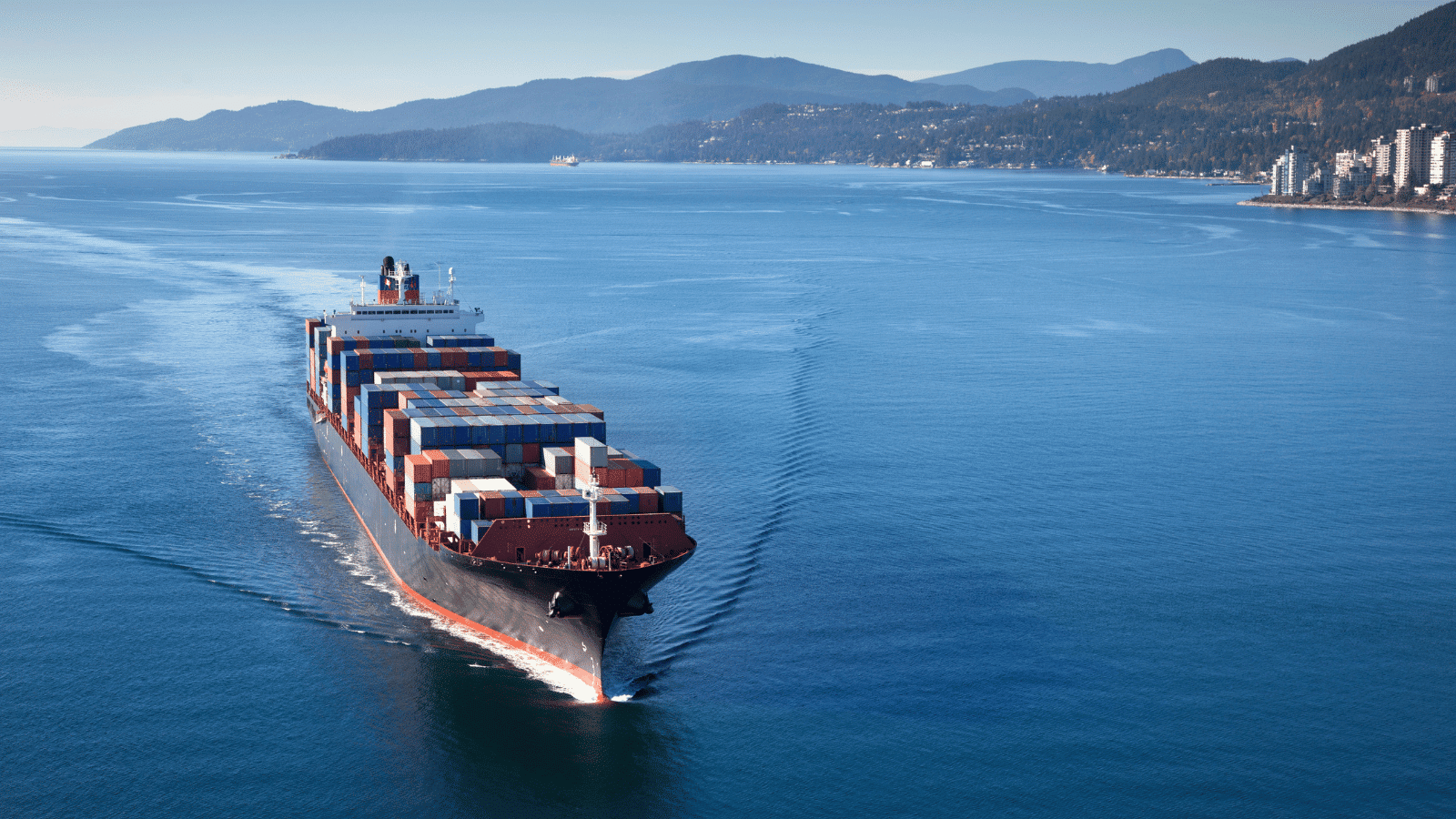
Recently, the European Commission, in decision SA.120994 approved a Dutch state aid scheme to support early adapters of clean maritime fuels during the period 2026-2030.1 In that decision the Commission had to assess the appropriateness of state aid and whether its benefits outweighed the distortion it was likely to cause.
The decision highlights the policy dilemma facing each individual government. Polluters can be forced via regulation to reduce their emissions. But that creates at least three kinds of problems. First, any necessary investment raises their costs and makes their products more expensive. Second, they may be able to pass on the price increase to those industries that are dependent on those products but then the users themselves will experience a loss in competitiveness. Other industries that have access to alternative products will buy less. This reduces demand for the affected products. Third, regulation normally changes the energy sources of polluters who switch from oil and gas to, for example, green electricity or green hydrogen. But since such fuels are still more expensive that conventional fuels, input costs rise too. Moreover, the total supply of green fuels still falls short of total energy needs. This then creates a bottleneck on the input side. In these conditions, state aid is the least imperfect solution.
Background
The scheme that was notified in May 2026 sought to provide investment grants to support the acquisition of clean and zero-emission vessels and for the retrofitting of vessels to run on renewable methanol and hydrogen. The purpose of the scheme was to reduce [GHG] emissions.
Currently, the vast majority of vessels use heavy oil as fuel, which is very polluting. According to the Commission decision on scheme SA.120994, maritime and inland waterway transport accounts for about 13% of the EU’s carbon-dioxide [CO2] emissions in the overall transport sector [2023]. The Clean Industrial Deal identifies the maritime transport sector as one of the “hard-to-decarbonise” sectors and prioritises support for renewable and low-carbon fuels for waterborne transport [paragraph 4 of the decision].
The intention of the Netherlands is to comply with international commitments set by the EU and the International Maritime Organization to reach climate-neutral shipping by mid-century. The notified scheme also conforms with the Clean Industrial Deal objectives.
The current regulatory framework “(7-8) sets out targets for the sector and is expected to drive the energy transition from 2030 onwards, it does not provide sufficient incentives for the objectives pursued under the scheme. In this regard, the Dutch authorities submit that sufficient investments already before 2030 are essential for demonstration purposes allowing the scaling-up of the technologies required for the long-term transition. They consider that early investments are also necessary to avoid delays in market readiness and to stimulate demand for alternative fuels. … The Dutch authorities further explain that the notified scheme aims to accelerate the deployment of GHG emissions reducing technologies … More specifically, the Dutch authorities consider that the availability of sustainable biofuels is expected to remain limited and insufficient to meet the long-term energy demand of the maritime sector. They therefore submit that the decarbonisation of fleets cannot rely solely on biofuels and requires the progressive and timely conversion of fleets to vessels capable of operating on alternative climate-neutral fuels, such as renewable methanol and renewable hydrogen.”
Beneficiaries
The scheme will provide support to shipowners established in the Netherlands. “(12) The Dutch authorities estimate that around 25 to 30 vessels would benefit from the scheme, leading to a structural reduction of 0.11 Mton CO2 as of from 2030.”
The number of beneficiaries appears to be small in relation to the total number of vessels operated by Dutch shipowners. This is because the scheme is a demonstration project and, for this reason, the beneficiaries will be selected on the basis of a ranking process.
Form of aid, aid intensity and maximum aid amount
The state aid will be granted in the form of non-repayable grants. “(16) In this respect, the Dutch authorities explain that grants are the most suitable aid instrument, and that other aid instruments, such as loans, guarantees or tax incentives, given the high upfront costs and the duration of the supported investments, would not be appropriate to incentivise shipping companies to undertake the eligible investments.”
Aid amounts are calculated as a share (aid intensity) of eligible costs which are the extra costs of investing in the aided project [see below for more details]. The maximum aid intensity is 40% of the eligible costs, plus 20 percentage points a small enterprises and 10 percentage points for medium-size enterprise. The total amount of aid may not exceed EUR 4 million per vessel. As 1 January 2028, maximum amount will be reduced to EUR 3.5 million per vessel, as both investment costs and operational costs are expected to decrease over time.
Obstacles to green transition
“(25) Given the composition of the Dutch fleet, which is mostly characterized by relatively small (short sea) vessels and specialized work vessels, …, renewable hydrogen and renewable methanol are considered the most suitable and economically promising climate-neutral energy technologies for the Dutch shipping sector. However, their deployment entails several challenges and barriers.”
“(26) First, … the deployment of vessels powered by renewable hydrogen and renewable methanol is hindered by technological barriers. The deployment of renewable hydrogen-powered vessels is constrained by operational challenges associated with the use of hydrogen as a marine fuel, including complex storage requirements, safety risks associated with its flammability and the need for advanced onboard systems. … The Dutch authorities suggest that these technological constraints contribute to coordination failures affecting the simultaneous development of the necessary ecosystem for the effective deployment of clean and zero-emission vessels.”
“(27) Second, with regard to economic barriers, the Dutch authorities note that retrofitting conventional vessels to operate on alternative propulsion systems requires extensive technical modifications and entails substantial additional investments. Similarly, the deployment of clean and zero-emission vessels entails significant costs. They further explain that alternative fuels such as renewable methanol and renewable hydrogen remain at an early stage of market development and are more expensive than conventional marine fuels. The Dutch authorities consider that the uptake and use of such fuels will, in the short to medium term, depend largely on international regulatory requirements, carbon pricing mechanisms and potentially other global measures, capable of reducing the current cost differential between fossil and renewable fuels. They further explain that investments in clean vessels depend on the availability of renewable fuels and refuelling infrastructure while investment in fuel production and infrastructure depends on sufficient demand from vessel operators, creating incentives for market participants to delay investment.”
“(28) Third, the Dutch authorities identify infrastructure barriers arising from the limited availability of refuelling and bunkering infrastructure. This creates a coordination failure that hinders the development of both the vessel and fuel markets, thereby further discouraging investment in the sector.”
“(29) The Dutch authorities also note that, although the sector is subject to increasingly ambitious decarbonisation objectives at international, Union and national level, the existing regulatory and market standards are not sufficient to drive the required investments in clean vessels in the short to medium term, since compliance with the short to medium term, goals can generally be achieved through operational measures (use of biofuels), without replacing or substantially modifying the vessels. They therefore consider that the measure addresses a market failure linked to negative environmental externalities, as shipowners do not have sufficient incentives to internalise the environmental benefits of investing in cleaner vessels.”
Later on in the Commission decision, it is also explained that “(31)(c) due to their smaller size, many Dutch short-sea and offshore vessels fall outside the scope of [current regulatory] instruments …, while the regulatory requirements applicable before 2035 remain comparatively limited, allowing operators to continue using existing vessels or comply through bio-blended conventional fuels. More generally, the Dutch authorities submit that, especially before 2035, FuelEU Maritime targets remain relatively modest, so that extending the life of existing vessels may remain economically rational.”
The Dutch authorities submitted a report that showed that the business case for clean vessels improves only gradually over time in terms of costs. According to the report, the total cost of ownership [TCO] of vessels powered by conventional fuels for the short to medium term remained more cost competitive than a similar investment in a clean vessel. The tipping point where the TCO for a clean shortsea vessel would be lower than that of a conventionally powered vessel would occur at the earliest in 2036.
Therefore, the Dutch authorities argued that the economic incentives created by the existing regulatory framework would be insufficient to support the rapid deployment of clean vessels and that additional public support was necessary to accelerate the transition to green fuels.
Counterfactual scenarios
The counterfactual scenarios are different for retrofitting of existing vessels and for acquisition of new vessels. In the case of retrofitting of existing vessels, if the retrofit extends the economic lifetime of the vessel beyond the lifetime it would have had in the absence of the retrofit, the CAPEX ensuring equivalent lifetime in the counterfactual scenario will be deducted from the retrofit costs.
In the case of acquisition of a newly built vessel, the counterfactual scenario is the construction or acquisition of a conventionally fuelled vessel of the same category, capacity, lifetime and functional characteristics.
Eligible costs
In the case of retrofitting of existing vessels, the eligible costs are the total investment costs necessary for the use of renewable methanol or hydrogen. The eligible costs are the extra investment costs in comparison with a conventional reference vessel, equipped with a new conventional energy supply line that would, in the absence of the aided investment, comply with the applicable EU and IMO regulatory requirements. If the retrofit extends the economic lifetime of the vessel beyond the lifetime it would have had in the absence of the retrofit, discounted overhaul maintenance and repair costs ensuring equivalent lifetime of the counterfactual will be deducted from the retrofit costs [paragraph 47]. In other words, the eligible costs are the actual investment costs minus the investment costs for compliance with current regulations minus any extra overhaul costs for longer economic life.
In the case of acquisition of new vessels, the eligible costs are s the difference between the total investment cost of the clean vessel and the investment costs in a conventional vessel with the same lifetime, cargo capacity and operational profile, equipped with a conventional combustion engine, complying with the applicable Union and IMO regulatory requirements.
Please note that any possible savings in or additional operating costs are not included in the calculations above. In this regard, “(50) the realistic counterfactual scenario in most cases would consist in the beneficiaries continuing the operation of their vessels for the same duration as the useful life of the vessel to be acquired in the factual scenario. Existing vessels may continue to be operated for a prolonged period, including beyond their initial economic lifetime. Many of these vessels are already largely or fully depreciated so that capital costs are limited to maintenance and overhaul costs. The higher operating costs of older and less efficient vessels may be offset by avoiding the investment cost of a new vessel so that extending the life of existing vessels remains economically rational. Consequently, while the TCO of the factual scenario includes the full investment costs of the clean vessel, just as in the methodology under the scheme, the TCO of the realistic counterfactual scenario includes only limited maintenance and overhaul costs while the methodology under the scheme prescribes full investment costs for a conventional vessel.”
“(51) Operating costs of the factual scenario are likely higher than operating costs of the counterfactual scenario. The current Union regulatory framework, notably EU ETS and FuelEU Maritime, will gradually increase the costs of operating more polluting vessels, through carbon pricing and progressively more stringent GHG intensity requirements. However, depending on the fuel type and vessel category, those cost increases are not expected to become sufficiently significant before 2035. The Dutch authorities also submitted a report, which shows that the operating costs associated with renewable methanol and renewable hydrogen remain higher than the costs of bio-blended conventional fuels (including EU ETS compliance costs), and also higher than the costs of running the vessel with conventional fuels (including EU ETS costs and FuelEU Maritime compliance costs). Accordingly, the Dutch authorities argue that excluding OPEX and basing eligible costs exclusively on a difference in CAPEX, as under the notified scheme, reduces eligible costs compared to including OPEX based on a difference in TCO as per point 178 CEEAG.”
Selection of projects
Projects will be selected on the basis of an open call. “(60) Applications will be assessed and ranked on the basis of objective, transparent and non-discriminatory criteria. … these criteria are defined ex ante in the call for applications, … they have been designed primarily to reflect the environmental objective of the measure, while also scoring for the quality of the application, and … they are applied equally to all applicants allowing projects to be ranked in an objective manner. … the majority of points to be allocated in the ranking process (55/100) reflect the environmental performance of a project, while the remainder of the points to be allocated (45/100) regard other criteria including the quality and completeness of the application as well as general contribution to wider objectives of the Dutch Maritime Masterplan.”
Compatibility with the internal market
After explaining within a mere half a page that the scheme constituted state aid, the Commission proceeded to assess its compatibility on the basis of the requirements in the guidelines on state aid for climate, environmental protection and energy savings [CEEAG].
“(76) The measure aims at supporting investments into the acquisition of clean vessels, defined in line with point 19(20)(e) CEEAG … or the retrofitting of vessels allowing them to (i) qualify as clean vessels … or; (ii) use or increase the share of biofuels and synthetic fuels, including renewable liquid and gaseous transport fuels of non-biological origin, in addition to, or as an alternative to, fossil-based fuels … It therefore falls within the scope of Section 4.3.1 CEEAG as set out in points 162 and 163(a) and (b) CEEAG.”
“(78) The notified measure must comply with the compatibility conditions in Section 3 CEEAG, where applicable, as well as the specific compatibility criteria for aid for the acquisition and leasing of clean vehicles and clean mobile service equipment and for the retrofitting of vehicles and mobile service equipment, set out in Section 4.3.1 CEEAG.”
Incentive effect
With respect to the incentive effect of the aid, the Commission noted the following. “(84) In order to demonstrate the presence of an incentive effect, point 28 CEEAG requires the identification of the factual scenario and the likely counterfactual scenario in the absence of aid and a quantification of the profitability of both scenarios.”
“(85) In the factual scenario with aid, the beneficiaries invest in a clean vessel or in the retrofitting of an existing vessel to allow the vessel to use or increase the share of renewable hydrogen and renewable methanol, in addition to, or as an alternative to, fossil-based fuels”.
“(86) In the absence of the aid, the beneficiaries would not undertake the same investments, or in any event, not within the same time-frame. More particularly, in cases where the vessel would be retrofitted, … generally no alternative investment would take place. Instead, beneficiaries would continue to operate the existing vessels for their remaining lifetime. In the counterfactual scenario, beneficiaries would invest in the maintenance of the existing vessels and bear the costs related to their operation, until the moment where regulatory measures make an investment into cleaner vessels commercially viable”.
“(87) The Commission considers that the elements provided by the Dutch authorities demonstrate that the measure is capable of changing the behaviour of the beneficiaries by inducing investments that would not take place or would take place only at a significantly later stage in the absence of aid. More precisely:
First, the Commission notes that the Dutch authorities have identified a credible counterfactual. Existing vessels are often already largely or fully depreciated, allowing shipowners to continue operating conventional vessels while avoiding the substantial capital costs associated with acquiring new clean vessels. Moreover, shipowners have the possibility of extending the operational lifetime of existing vessels through overhauls. The Commission therefore considers that it is plausible that, in the absence of aid, beneficiaries would continue operating existing vessels, until at least until around 2035 when regulatory requirements remain comparatively moderate.
Second, the Commission notes that the maritime sector continues to face technological uncertainties regarding the development, availability and commercial deployment of renewable hydrogen- and renewable methanol-powered vessels. … The Commission considers that those uncertainties further increase the investment risk for beneficiaries to undertake costly investments at an early stage.
Third, the Commission notes that investments in clean and zero emission vessels entail substantial additional capital and operating costs compared to conventional vessels. Moreover, renewable hydrogen and renewable methanol are still more expensive than conventional marine fuels. As demonstrated by the quantification of the factual and counterfactual scenarios contained in the report commissioned by the Dutch authorities … the TCO of the clean vessels remains significantly higher than that of the relevant counterfactual during the period covered by the measure. The Commission, therefore, considers that despite the gradual improvement of the business case resulting from regulatory developments and the expected deployment of clean technologies, the commercial viability of such investments will, in the short to medium term, continue to depend on carbon pricing mechanisms and other global measures capable of narrowing the cost differential of clean vessels with that of conventional fuels, as well as the evolving regulatory requirements.
Fourth, the Commission also finds it plausible that the current Union regulatory framework, including the EU ETS and FuelEU Maritime, may not in itself provide sufficient incentives for the immediate deployment of clean and zero-emission vessels in the case of the Netherlands. In particular, a large part of the Dutch short-sea and offshore fleet falls outside the scope of those instruments. For the part of the fleet that is subject to additional requirements in terms of GHG emission reductions, it should be noted that compliance with these requirements, at least with those applicable until 2035, can be achieved without any modification of the energy supply line. … The Commission therefore considers that the existing regulatory framework does not, on its own, induce the investments supported under the notified measure and in any event not within the timeframe envisaged by the Dutch authorities.
Fifth, the Commission notes that the limited availability of refuelling and bunkering infrastructure gives rise to a coordination failure. More precisely, there is a strong dependency between shipowners, fuel producers and ports (bunkering and safety infrastructure), whereby each party hesitates to invest until the others move first. As each market participant depends on investment decisions by the others, the Commission considers that this coordination failure further delays the deployment of clean maritime technologies and reinforces the need for public intervention.
Sixth, the Commission notes that the report commissioned by the Dutch authorities supports these findings. In particular, the quantified comparison between the factual and counterfactual scenarios shows that conventional vessels remain the least-cost option until around 2035 for short-sea vessels and until around 2040 for offshore vessels, even where those vessels are subject to FuelEU Maritime and the EU ETS … The Commission considers that the investments supported under the notified measure would either not take place or would occur only at a significantly later stage in the absence of aid.”
“(91) Point 32 CEEAG explains that aid granted merely to cover the costs of adapting to Union standards has, in principle, no incentive effect. …, although the maritime sector is subject to EU ETS and FuelEU Maritime, those instruments do not require beneficiaries to undertake the supported investments prior to 2035 in the period where the measure is in force (from the Commission’s approval until 2031) and allow compliance through less costly alternatives, including the continued operation of existing vessels and the use of bio-blended conventional fuels … Moreover, both in case of investments in a new vessel and in case of retrofitting investments, costs needed to ensure compliance with international and EU standards are not eligible … For investments in a new vessel, this means that the investment costs in the counterfactual investment must regard a vessel that complies with those standards. For retrofits, where eligible costs are the total investment costs, this is effectuated by the condition that without the investment, the vessel would continue to comply with those standards and if investments are needed to such compliance, they need to be deducted.”
“(93) Finally, points 166 to 169 CEEAG require that the factual and counterfactual scenarios used when establishing the eligible costs are comparable, including as regards the lifetime of the vessel. … for the purpose of establishing the eligible costs for investments in a new vessel, the investment costs of a conventional vessel with the same lifetime, cargo capacity and operational profile, equipped with a conventional combustion engine, complying with the applicable Union and IMO regulatory requirements have to be deducted … This is a conservative approach since it assumes that the beneficiary would acquire a new conventional vessel in the absence of aid, whereas a realistic counterfactual would often be the continuation of the operation of the existing vessels for the same lifetime of the vessel to be acquired in the factual scenario … This approach ensures that costs unrelated to environmental protection are removed from eligible costs. For projects consisting in the retrofitting of an existing vessel, … the eligible costs are the total investment costs, whereby, however, discounted maintenance and repair costs ensuring an equivalent lifetime of the counterfactual need to be deducted … The measure therefore complies with points 166 to 169 CEEAG.”
Appropriateness of the aid instrument
Given that the intervention of the state was necessary because the current regulatory framework could not induce shipowners to accelerate the transition to cleaner fuels, the Commission’s assessment of the appropriateness of state aid as opposed to stricter regulatory requirements is illuminating.
“(108) According to point 39 CEEAG, the proposed aid measure must be an appropriate policy instrument to achieve the intended objective of the aid, while there must not be a less distortive policy and aid instrument capable of achieving the same results. In addition, pursuant to point 171 CEEAG, the Commission should also take into consideration the potential of other types of interventions than State aid to stimulate the development of the clean mobility market and achieve an impact comparable to that of the proposed measure.”
“(109) For the purposes of a State aid assessment under Section 4.3.1 CEEAG, the Commission normally considers that State aid is an appropriate instrument where the Member State can demonstrate that alternative policy options would not be equally suitable to contribute to the development of the economic activities concerned and where it can demonstrate that alternative, less distortive, aid instruments would not deliver equally efficient outcomes.”
“(110) In view of the substantial additional investment costs associated with the acquisition of newly built vessels equipped with hydrogen or methanol energy supply lines and with the retrofitting of existing vessels …, the fact that those additional costs are not expected to be sufficiently offset by the economic benefits generated during the lifetime of the scheme, policy instruments other than State aid, such as stricter regulatory standards could not bring about effects at the scale and within the timeframe as that of the proposed scheme, without bringing the viability of the entire Dutch maritime sector at risk. … Accordingly, the Commission considers that there is no alternative intervention that would stimulate the development of clean maritime vehicles with an effectiveness comparable to that of the notified aid scheme.
Proportionality
With respect to the proportionality of the aid, the Commission noted the following. “(113) According to point 47 CEEAG, State aid is considered to be proportionate if the aid amount per beneficiary is limited to the minimum needed for carrying out the aided project or activity. Moreover, in line with point 172 CEEAG the aid must be limited to the minimum necessary to increase the level of environmental protection, compared to the counterfactual scenario in the absence of aid.”
“(114) To this effect, point 173 CEEAG states that aid should, in general, be granted through a competitive bidding process. However, point 176 CEEAG lists cases where by way of derogation, aid under Section 4.3.1 CEEAG may be granted without a competitive bidding process.”
“(115) In the present case, the Commission considers point 172 CEEAG to be complied with for the reasons set out in recitals (116) to (123). More specifically, the Commission finds that the information provided by the Dutch authorities supports their position, namely that a bidding process would not be appropriate to ensure the proportionality of the aid and that using an alternative method does not increase the risk of undue distortions of competition, in line with point 176(b) CEEAG.”
“(117) The use of an alternative method for determining the aid amount, in particular combined with the methodology to select aid beneficiaries amongst all applicants, does not entail a higher risk of undue distortions of competition. The Commission notes in that regard: (a) that the aid is granted following an open call for projects …; (b) that beneficiaries are selected based on objective, transparent and non-discriminatory criteria known in advance …, that these criteria are for the majority linked to the environmental objective of the measure (GHG emission reductions) while also taking into account the quality of the applications and (c) that the allocation procedure ensures that potential applicants are adequately informed of the scope of the measure and of the conditions for granting aid through its publication on the RVO website in advance”.
“(120) According to point 177 CEEAG, the aid may be considered proportionate if it does not exceed 40% of the eligible costs. The aid intensity may be increased by 10 percentage points for zero-emission vehicles and by 10 percentage points for medium-sized enterprises or by 20 percentage points for small enterprises. The aid under the scheme complies with those maximum aid intensities”.
“(121) Second, the Commission notes that for projects concerning the acquisition of a newly built vessel the eligible costs under the measure are not defined following exactly the method prescribed in points 178 CEEAG, which provides that in those cases eligible costs consist of the difference between the TCO of the vessel in the factual scenario and the TCO of the applicable counterfactual scenario. Instead, under the notified scheme, eligible costs for those cases are calculated as the difference between the total investment costs in the factual scenario and the investment costs of an assumed counterfactual scenario, consisting of an investment in a conventional vessel with the same lifetime, cargo capacity and operational profile, equipped with a conventional combustion engine, complying with the applicable Union and IMO regulatory requirements.”
“(122) The Commission agrees that the alternative methodology applied by the Dutch authorities, besides being easier for beneficiaries to apply and easier for the Dutch authorities to verify, can also generally be considered as more conservative than the methodology described in point 178 CEEAG, in that eligible costs under the notified scheme will be lower than those that could 28 be determined under point 178 CEEAG, for the reasons provided by the Dutch authorities (recitals (50) and (51)). In particular: (a) In most cases the actual counterfactual will imply that the beneficiary continuous operating its vessel for the same duration as the useful life of the vessel to be acquired in the factual scenario, which is possible with maintenance and overhaul CAPEX instead of acquiring a new vessel. The higher operating costs of older and less efficient vessels are easily offset by avoiding the investment cost of a new vessel so that extending the life of existing vessels remains economically rational. (b) Also, operating costs of the factual scenario are likely higher than operating costs of the counterfactual scenario, since the current Union regulatory framework will only gradually increase the cost of operating more polluting vessels. … As a result, excluding OPEX and basing eligible costs exclusively on a difference in CAPEX (as under the notified scheme) can indeed be expected to reduce eligible costs compared to the methodology set out in point 178 CEEAG.”
“(123) As regards projects concerning the retrofitting of vessels to improve their level of environmental protection, the eligible costs under the notified scheme correspond to the total costs of the retrofitting, given that in the counterfactual scenario the vessels retain the same economic life in the absence of the retrofitting”.
“(124) The Commission therefore concludes that the scheme complies with points 178 and 179 CEEAG as regards the establishment of the eligible costs.”
“(125) Point 56 CEEAG explains that when aid under one measure is cumulated with aid under other measures, Member States must specify the method used to ensure that the total amount of aid for a project or an activity does not lead to overcompensation or exceed the maximum aid amount allowed under the CEEAG. Moreover, point 57 CEEAG indicates that when Union funding that does not constitute State aid is combined with aid, the total amount of public funding granted in relation to the same eligible costs must not lead to overcompensation. Under the notified scheme, the aid may not be cumulated with other State aid or with Union funding not constituting aid for the same eligible costs where this would lead to overcompensation or exceed the applicable maximum aid intensities”.
No undue distortion of competition
The Commission found in paragraphs 128-135 that the scheme would have limited effect on competition. First, the scheme supports the shift to cleaner technologies that would not have occurred at the same scale and the same timeframe without state aid. Second, the scheme addresses clearly identified market failures which prevent the relevant investments from being carried out by the market alone. Third, the scheme is not expected to lead to the creation or strengthening of substantial market power for the beneficiaries. Although the aid is not awarded through a competitive bidding process, the scheme is open to all eligible operators and to a range of technologies capable of delivering the environmental objectives pursued by it. Fourth, the scheme will not bring new vessels into service that will result in or aggravate overcapacity in the sector. Such a risk is mitigated to the minimum by the design of the scheme which does not support the acquisition or construction of new vessels as such. Also, the cost of the vessel itself is not eligible. Fifth, the scheme is not likely to displace activities or investments from one region of the internal market to another without any corresponding environmental benefit. Sixth, the scheme will be of limited duration.