

State Aid Law Blog

State Aid Uncovered Blog

In Lexxion’s State Aid Uncovered blog, Prof. Phedon Nicolaides publishes weekly critical analyses of recent State aid judgments and decisions. Each post presents the key points of a court judgment or EU Commission decision, places it in the context of similar case law or practice, assesses the underlying reasoning and highlights any inconsistencies or contradictions.

Guest contributions from other State aid experts will also be published on the blog at irregular intervals to complement the content of the blog posts.

Subscribe now!

Compensation for Non-payment of State Aid Can Constitute State Aid

Introduction A perennial question by aggrieved investors who feel cheated by u-turns in public policy is: “May I claim compensation for damage that I have suffered as a result of non-payment of the State aid that was promised to me?” As a result of recent case law, it is now clear that there are several answers to this question: First, […]

i) Compensation Can Be State Aid ii) Failure to Act

Introduction This article reviews two judgments concerning a claim that compensation does not constitute State aid and a complaint that the Commission had failed to act, respectively. The latter case is particularly interesting because it is probably the only judgment in the past decade or two that the Court of Justice has actually upheld a claim that the Commission breached […]

Public Funding of Healthcare Services Based on the Principle of Social Solidarity Is not State Aid

Introduction In June 2016, the Commission received a complaint from the Medical Chamber of Slovenia – a professional organisation of private medical doctors and dentists practicing in Slovenia – concerning alleged State aid granted by Slovenia to public hospitals and public healthcare centres. With decision SA.45844, the Commission recently decided that the public funding of public hospitals and healthcare centres […]

State Aid to Support Production of Penicillin in the EU

Introduction The Commission’s block exemption regulations and the guidelines do not cover exhaustively State aid for all conceivable policy objectives. For example, there are no specific rules on investment subsidies for large enterprises in non-assisted regions. This does not mean that Member States may not grant State aid to a large company to manufacture a product they consider important. Rather, […]

State Aid to Support “Applied Research” in Solid-State Batteries

Introduction France notified a measure to grant State aid to ProLogium for the implementation of the Promotheus R&D project which concerned the development of solid-state batteries [SSB] for electric vehicles. ProLogium is a large enterprise with 758 employees. The Commission approved the measure in decision SA.106740.[1] The aid measure has several unusual features. First, ProLogium committed to disseminate the scientific […]

An Unusual SGEI

Introduction Member States are free to determine what the regard as a service of general economic interest [SGEI]. The Commission may only check whether the definition is free of manifest error and that any compensation that is provided conforms with the conditions laid down in the 2012 SGEI package. Member States commit a manifest error when they designate as SGEI […]

The Territorial Tax Systems May also Tax Profits Diverted Abroad

Introduction Taxes are burdens on undertakings. They cannot be State aid. However, tax exemptions or reductions can be State aid if they cannot be objectively justified. When a tax measure is in the form of a reduction or exemption, it is relatively easy to establish its selectivity in the meaning of Article 107(1) TFEU. However, when a tax is levied […]

European Court of Auditors, Report on the Implementation of the EU Budget for the 2023 Financial Year, 10 October 2024

State Aid Blogs - State Aid Uncovered photos 10
The annual report on the 2023 EU budget by the European Court of Auditors finds that in the field of State aid national authorities wrongly supported ineligible costs. Errors in public procurement and State aid were the largest source of irregularities. Main findings concerning public procurement and State aid “The risk of error is high for expenditure subject to complex […]

Revenue from a Compulsory Charge Is a State Resource

State Aid Blogs - State Aid Uncovered photos 14
Introduction On 26 September 2024, the Court of Justice [CJEU] delivered four judgments in four related cases: C-790/21 P, Covestro Deutschland v Commission C-792/21 P, AZ v Commission C-794/21 P, Germany v Commission C-795/21 P, WEPA Hygieneprodukte v Commission All cases concerned appeals against the corresponding judgments of the General Court by which it dismissed the actions for annulment of […]

Who is “Interested Party” that Can Challenge a Commission Decision and when Must the Commission Open the Formal Investigation Procedure

Introduction On 5 September 2024, the Court of Justice of the EU [CJEU] delivered two judgments on the two most frequent procedural issues on State aid: Who has standing to challenge a Commission decision and when the Commission is obliged to initiate the formal investigation procedure. These two issues are closely connected. Those whose interests are harmed by State aid […]

A Research Project Based on Collaboration with a Research Organisation

Introduction After pre-notification contacts, Croatia notified, in March 2023, State aid amounting to a EUR 179.5 million for an R&D project regarding the development of an innovative autonomous electric vehicle [a “robo-taxi”]. The aid, in the form of a grant, was to be provided to Project 3 Mobility LLC [P3M]. The Commission approved it in decision SA.101759.1 The aid beneficiary, […]

Authorisation of State Aid after the Start of a Project

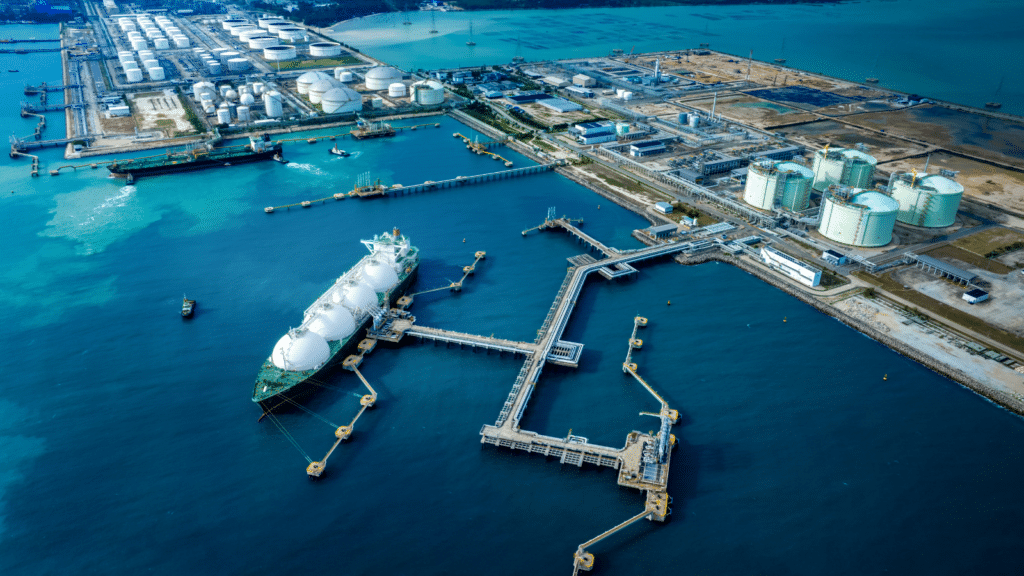
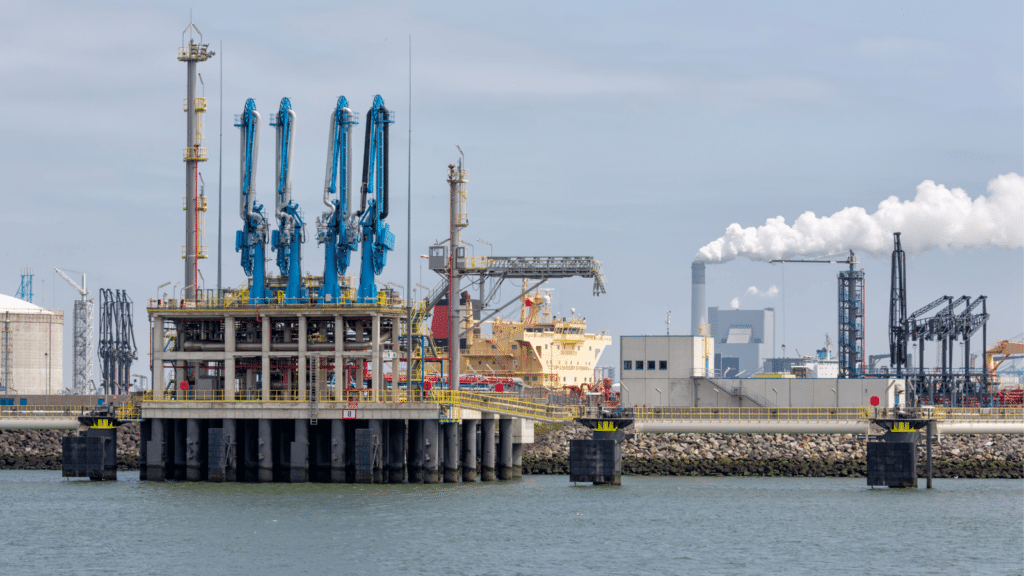
Introduction In June 2021, the European Commission, in decision SA.55526, approved an amount of EUR 167 million of State aid for the construction and operation of a liquefied natural gas [LNG] terminal close to Alexandroupolis in northern Greece. In December 2022, Greece notified a measure involving additional State aid of EUR 106 million for the same project. The Commission authorised […]

Restructuring State Aid

Introduction State aid to failing undertakings is the most distortionary form of public subsidies. They prevent the market exit of inefficient companies. For this reason, State aid for rescue or restructuring of undertakings in difficulty must always be notified to the Commission which examines each case very carefully and allows this kind of aid only when, among other things, the […]

Public Procurement and State Aid

Introduction A faulty public procurement procedure or the use of discriminatory selection criteria can confer an advantage on the chosen undertaking that may constitute an advantage in the meaning of Article 107(1) TFEU. The result will be infringement of both public procurement rules and State aid rules. A recent Commission decision, SA.47650, is instructive on how Member States should design […]

A Case of a Narrow Tax that Is Not Selective

Introduction On 17 April 2024, the General Court ruled, in case T-112/22, Ideella föreningen Svenska Bankföreningen med firma Svenska Bankföreningen, Näringsverksamhet & Länsförsäkringar Bank v Commission, that a Swedish tax on only nine banks was not selective by not taxing the many smaller banks.1 The applicants, a Swedish banking association and a Swedish bank, respectively, sought the annulment of Commission […]

Pricing of Access to Infrastructure for the Treatment of Waste Water

Introduction It is not unusual for EU courts to refer to the Commission’s 2016 Notice on the Notion of State Aid as a means of shedding light to the more obscure aspects of that notion. What is very unusual is for EU courts to treat the Notice as if it has the same status as the guidelines that bind the […]

Awards by Arbitration Tribunal

Introduction In an unusual judgment, the Court of Justice found on 14 March 2024, in case C-516/22, Commission v UK, that the UK had infringed Article 4(3) TEU, Article 108(3) TFEU, Article 267(1)&(3) TFEU and Article 351(1) TFEU, in conjunction with Article 127(1) of the Agreement on the withdrawal of the UK from the EU because the UK Supreme Court […]

An Innovative Risk-Sharing Tool for the Support of an LNG Terminal

Introduction The Commission, in decision SA.102163, authorised State aid for the construction of a terminal for liquefied natural gas [LNG] in Brunsbüttel, Germany.1 The project consists of an LNG import, storage and distribution facility with annual capacity of about 10 billion m3. The project is carried out by the German LNG Terminal GmbH [GLNG] which has three shareholders: the Dutch […]

The Court of Justice Conflates Objective Justification with Policy Objective, in the context of Public Support of Green Electricity

Introduction Suppose a Member State subsidises the installation of solar panels on the roof of a corporate building situated at number 5 on Main Street. Is this a general measure because there is no other building in the whole country with the same address? Of course, it is not a general measure. The uniqueness of the address is irrelevant. Apart […]

Applying the Funding Gap Method to an Important Project of Common European Interest – Part II

Introduction On 28 February 2024, the General Court delivered an important judgment in case T-390/20, Scandlines v Commission.(1) The judgment is important because it interpreted the Commission guidelines on Important Projects of Common European Interest [IPCEI], the funding gap methodology for determining the necessary amount of aid and the 2008 Commission Notice on state guarantees. Scandlines sought annulment of Commission […]

Subscribe to our newsletter for updates on legal developments, upcoming conferences, workshops, and publications in your areas of interest.

Newsletter: Subscribe now