


Europäisches Beihilfenrecht Blog

State Aid Uncovered Blog

In Lexxions Blog „State Aid Uncovered” veröffentlicht Prof. Phedon Nicolaides wöchentlich kritische Analysen zu den neuesten Urteilen und Entscheidungen zu staatlichen Beihilfen. Jeder Beitrag stellt die wichtigsten Punkte eines Gerichtsurteils oder einer EU-Kommissionsentscheidung vor, ordnet sie in den Kontext ähnlicher Rechtsprechung oder Praxis ein, bewertet die zugrundeliegende Argumentation und zeigt etwaige Ungereimtheiten oder Widersprüche auf.

In loser Folge werden auf diesem Blog auch Gastbeiträge von anderen Experten für staatliche Beihilfen veröffentlicht, welche die Inhalte der Blogbeiträge ergänzen.

Jetzt abonnieren!

Professor at Maastricht University; Professor at University of Nicosia, and Academic Director at Lexxion Training

The Discount Rate Applied to State Aid and Eligible Costs of Regional Investment Projects

The discount rate for calculating the present value of state aid granted in tranches is the reference rate; i.e. base rate plus 100 bp. The discount rate for calculating the present value of an investment project is the weighted average cost of capital of the investor. Introduction When state aid is granted in instalments, the amount of future tranches has […]

Green Economy Hub

A municipality that develops commercial infrastructure engages in an economic activity.  A municipality that finances the development of commercially used infrastructure may grant state aid to itself.  The selection of the operator of commercial infrastructure on the basis of a competitive procedure eliminates any advantage for the operator.  The users of a commercially operated infrastructure do not receive state aid if they pay prices at market […]

State Aid for a Fish Auction Hall

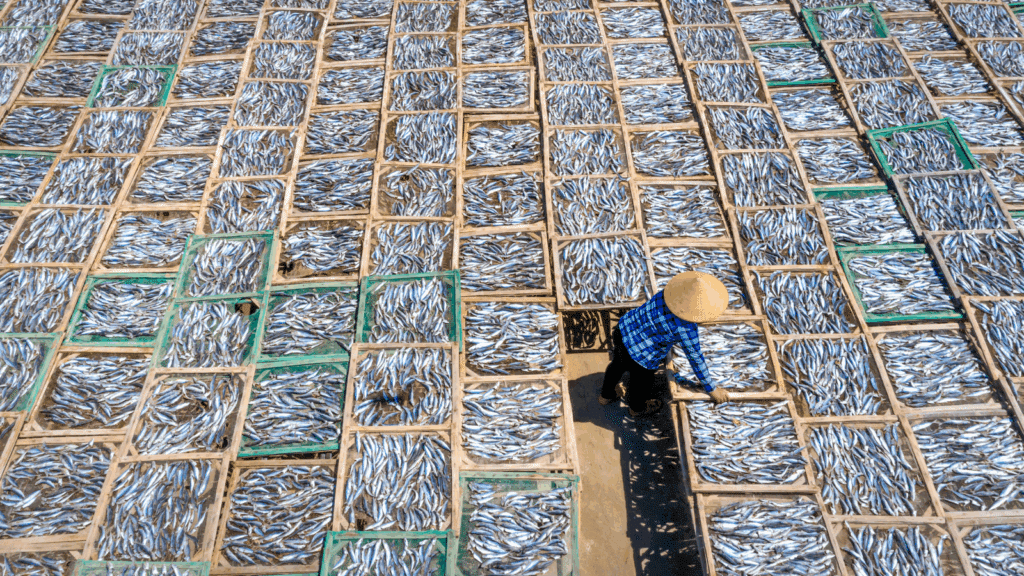
State aid may cover up to 100% of the funding gap of a project.  The funding gap demonstrates that the aid has an incentive effect.  The aid is proportional if it does not exceed the funding gap.  State aid in the fisheries sector may have to comply with both Regulation 2022/2473 [FIBER] and the fisheries guidelines.  Introduction The Commission recently approved the granting of […]

The Gross-Grant Equivalent of State Aid in Public Guarantees

State Aid Blogs - State Aid Uncovered photos 2026 02 23T112337.714
The amount of state aid embedded in a public guarantee is the difference between the market rate of the premium and the premium, if any, that is actually charged. The market rate of premium reflects the risk borne by the guarantor, which in turn reflects the credit rating of the beneficiary and the value of the collateral, if any, that […]

Who Can Challenge a Commission Decision Authorising State Aid

Being a competitor of the aid recipient is not enough. The competitor must show that it is directly and individually affected by the aid. Or, the competitor must show that it is directly affected by the Commission decision and that the decision leaves no discretion to the Member State concerned on how to comply with it. Introduction This article reviews […]

De minimis Aid

Member States must ensure that individual awards of de minimis aid do not breach the maximum allowable amount per undertaking in any three year period. They can ensure that the maximum amount is not exceeded either by establishing a national register or by checking the amounts already granted to the applicant undertaking and by confirming that any new award will […]

The 2025 Edition of the State Aid Scoreboard

• In 2024, the total non-crisis state aid granted by Member States reached EUR 152 billion, an increase of 11% over the previous year. • The three most important policy objectives were environmental protection & energy savings, research and regional development. • The General Block Exemption Regulation was the basis for about 3200 measures delivering EUR 60.1 billion of aid. […]

Start of Works

Introduction Before any state aid granted, the granting authority must establish at a bare minimum that the application satisfies the formal incentive effect: that the project has not already started. The start of works is normally signified by the start of construction or the order of equipment or any other decision that indicates the commitment of the aid applicant to […]

Definition of Public Service Obligation & Calculation of Public Service Compensation – PART II

A competitive selection process whereby only one bidder submits an offer does not conform with the fourth Altmark condition. Introduction Commission decision 2025/2453 that was published in the Official Journal of 30 December 2025 approved State aid totalling EUR 853.6 million in the form of public service compensation [PSC] for Corsica Linea and La Méridionale.[1] The PSC was granted by […]

Definition of Public Service Obligation & Calculation of Public Service Compensation – PART I

A competitive selection process whereby only one bidder submits an offer does not conform with the fourth Altmark condition. Introduction Commission decision 2025/2453 that was published in the Official Journal of 30 December 2025 approved State aid totalling EUR 853.6 million in the form of public service compensation [PSC] for Corsica Linea and La Méridionale.[1] The PSC was granted by […]

Selectivity and the Reference System

Introduction A public measure must be selective and satisfy the other criteria of Article 107(1) TFEU in order to be classified as State aid. The detection of selectivity requires a comparative exercise: a comparison of the aid beneficiary or beneficiaries with non-aid beneficiaries. But which non-aid beneficiaries to take into account. The answer is those who are in a similar […]

How to Measure the Damage Caused by an Exceptional Occurrence

On 25 June 2025, the General Court, in case T‑366/22, Ryanair v Commission, dismissed the action brought by Ryanair seeking the annulment of Commission decision SA.56867.[1] That decision authorised compensation under Article 107(2)(b) TFEU for damage suffered by the German airline Condor as a result of the covid-19 pandemic. However, Condor had been in financial trouble long before the outbreak of the […]

The Principles of Legal Certainty and Protection of Legitimate Expectations

Introduction The Commission, like all EU institutions, must respect the principles of legal certainty and protection of legitimate expectations. In the field of State aid, those principles mean, among other things, that in practice the Commission cannot reopen a State aid case if there is no change in the measure in question. On 26 June 2025, the Court of Justice […]

Deductions from the Tax Base Are not Necessarily Selective

Introduction Member States may design their tax system as they wish, as long as they conform with State aid rules. Tax systems do not only contain taxes but also exceptions from taxes or tax bases. Exceptions that apply to any tax payer are not selective in the meaning of Article 107(1) TFEU. For example, deduction from taxable income of the […]

A Finnish Tax on Sugary Drinks is not Selective

Introduction Several Member States have taxed or want to tax soft drinks with added sugar. They are one of the causes of obesity without having any nutritional value. The problem is how to tax the sugary drinks without the tax being considered as State aid for the drinks that are not taxed. A recent measure implemented by Finland provides guidance […]

Commission Approves State Aid after a Project Has Started

Introduction A fundamental rule of State aid is that no aid may be granted after a project has already started. This rule is repeated in every Commission regulation or set of guidelines. Aid to a project that has already started lacks incentive effect and as such it is a pure waste of public money. However, in December 2022, the Court […]

Public Support for Infrastructure

Introduction Normally, each weekly article reviews just one court judgment or Commission decision. This article deviates from normal practice. It reviews three recent Commission decisions on three different French measures of support of port infrastructure: SA.115739: Direct inland waterway access to Port of Le Havre [April 2025][1] SA.113270: Investment aid to the port of Dunkirk [December 2025][2] SA.111060: Modernisation of […]

Coverage of Losses of a State-Owned Company

Introduction Eu law does not prohibit states from owning or investing in companies [see Article 345 TFEU]. This means that when the state, as owner, makes payments to the companies it owns or loses part of its capital as a result of commercial losses, it does not grant to them State aid if such payments are mandated by law and […]

How to Calculate the Amount of Compensation of SGEI Providers: The Case of Distribution of Newspapers and Periodicals by Belgium’s bpost

Introduction Public funding that offsets costs incurred as a result of compliance with legal obligations constitutes State aid, if all of the criteria of Article 107(1) TFEU are satisfied. The fact that the purpose of the aid is to offset higher than otherwise costs is irrelevant. However, Article 106(2) TFEU allows Member States to grant State aid to compensate for […]

When Does Existing Aid Become New Aid?

Introduction New State aid schemes have to be notified to the Commission for prior authorisation. Changes to already authorised schemes that do not alter their nature or significantly increase their amounts do not need to be notified as they are considered to be existing aid. Article 4(1) of Regulation 794/2004 explains that “an alteration to existing aid shall mean any […]

Ever wondered how Lexxion Seminars are like? Read this Summary of „State Aid in Tax Measures“

The following is a summary of the main points that were presented and the issues that were discussed in the seminar on State Aid in Tax Measures that was held by Lexxion in Brussels on 7-8 November 2016. The summary has been prepared for information purposes only and it is not meant to be a precise record of the proceedings […]

Right of Access and State Aid Procedures: a Look at the General Presumption of Confidentiality and the Overriding Public Interest in Case C-271/15, Sea Handling v Commission

Today we are glad to welcome Dr. Gherardo Carullo, research fellow and Ph.D. in law at University of Milan, LL.M. (King’s College London), to our State Aid Blog. He specialises in public law, from a national and European perspective, and in particular in State intervention in the markets, both in his academic studies and in the legal profession. In this […]

Article 263(4) TFEU: Third Party Challenges to State Aid Decisions

We are happy to welcome back Prof Erika Szyszczak on the State Aid Blog today. She is Professor of Law and Fellow of the UK Trade Policy Observatory at University of Sussex and practising barrister and ADR mediator at Littleton Chambers, Temple, London. Today she shares her views on two cases that shed new light on third party rights to […]

Polish Green Certificates Held by the Commission to Be Compatible State Aid: a Curious Story Comes to an End

We are happy to welcome Dr Michał Bernat on the State Aid Blog today. He is a legal and tax adviser and State aid expert at the Dentons offices in Warsaw. Today he shares his insights on a decision in a case involving Polish green certificates issued to producers of energy from renewable energy sources. Read on to learn more. […]

Court’s Diary – September 2016

Find below the court’s diary for all State aid cases this month. Would you like to write a comment on one of them? Please don’t hesitate and get in touch with us ([email protected]), we are happy to publish your comment on the blog.   Wednesday 14/09/2016 Judgment in Case T-57/15 – Trajektna luka Split v Commission (General Court – Seventh Chamber)   […]

New Video: How to notify State aid?

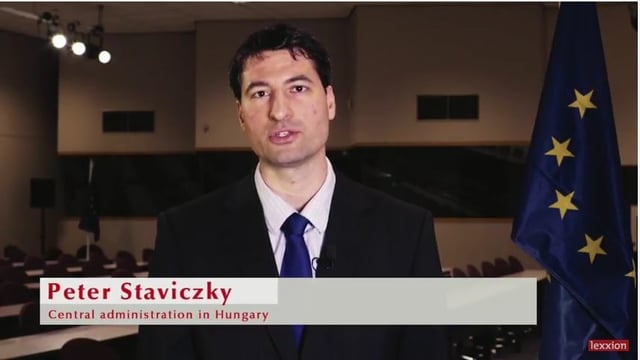
What is State aid? Why do I need to be concerned about State aid? These and many more basic questions are answered in our videos on YouTube. Make sure to visit us!   Today one of our speakers and Attaché for State aid of the Hungarian central administration, Peter Staviczky explains how you notify State aid to the European Commission. Find out how to […]

New Video: What is GBER and how to use it?

What is State aid? Why do I need to be concerned about State aid? These and many more basic questions are answered in our videos on YouTube. Make sure to visit us!   Today Alexander Rose from the Government Legal Service of the UK explains what the GBER (=General Block Exemption Regulation) is and how to use it. Watch the video, comment and […]

Court’s Diary – July 2016

Find below the court’s diary for all State aid cases this month. Would you like to write a comment on one of them? Please don’t hesitate and get in touch with us ([email protected]), we are happy to publish your comment on the blog.     Thursday 14/07/2016 Judgment in Case T-143/12 – Germany v Commission (General Court – Eigth Chamber) Tuesday 19/07/2016 […]

Remarks on the Infrastructure Section of the Commission Notice on the Notion of State Aid

Today we are glad to welcome once again Gian Marco Galletti as guest author on our State aid blog. He is a PhD Candidate & EU Law Tutor at the Dickson Poon School of Law of King’s College London. In this blog post he comments on the Commission’s new Notice on the notion of State aid. Thank you for your […]

State Aid Goes YouTube: Visit Phedon Nicolaides on our YouTube Channel

What is State aid? Why do I need to be concerned about State aid? What is General Block Exemption Regulation (GBER) and how to use it? These and many more basic questions will be answered in our videos on YouTube. Make sure to visit us!   With great pleasure we announce the beginning of a new era of e-learning about […]

Sie möchten einen Beitrag einreichen oder zur Weiterentwicklung des Blogs State Aid Uncovered beitragen? Weitere Details finden Sie auf der englischsprachigen Seite.

Gastbeitrag einreichen

Abonnieren Sie unseren Newsletter für aktuelle Informationen zu Entwicklungen, Konferenzen, Seminaren und Veröffentlichungen in Ihrem Interessenbereich.

Newsletter: Jetzt abonnieren