

State Aid for a Fish Auction Hall

State Aid for a Fish Auction Hall - State Aid Uncovered photos 2026 03 03T093248.830
  • State aid may cover up to 100% of the funding gap of a project. 
  • The funding gap demonstrates that the aid has an incentive effect. 
  • The aid is proportional if it does not exceed the funding gap. 
  • State aid in the fisheries sector may have to comply with both Regulation 2022/2473 [FIBER] and the fisheries guidelines. 

Introduction

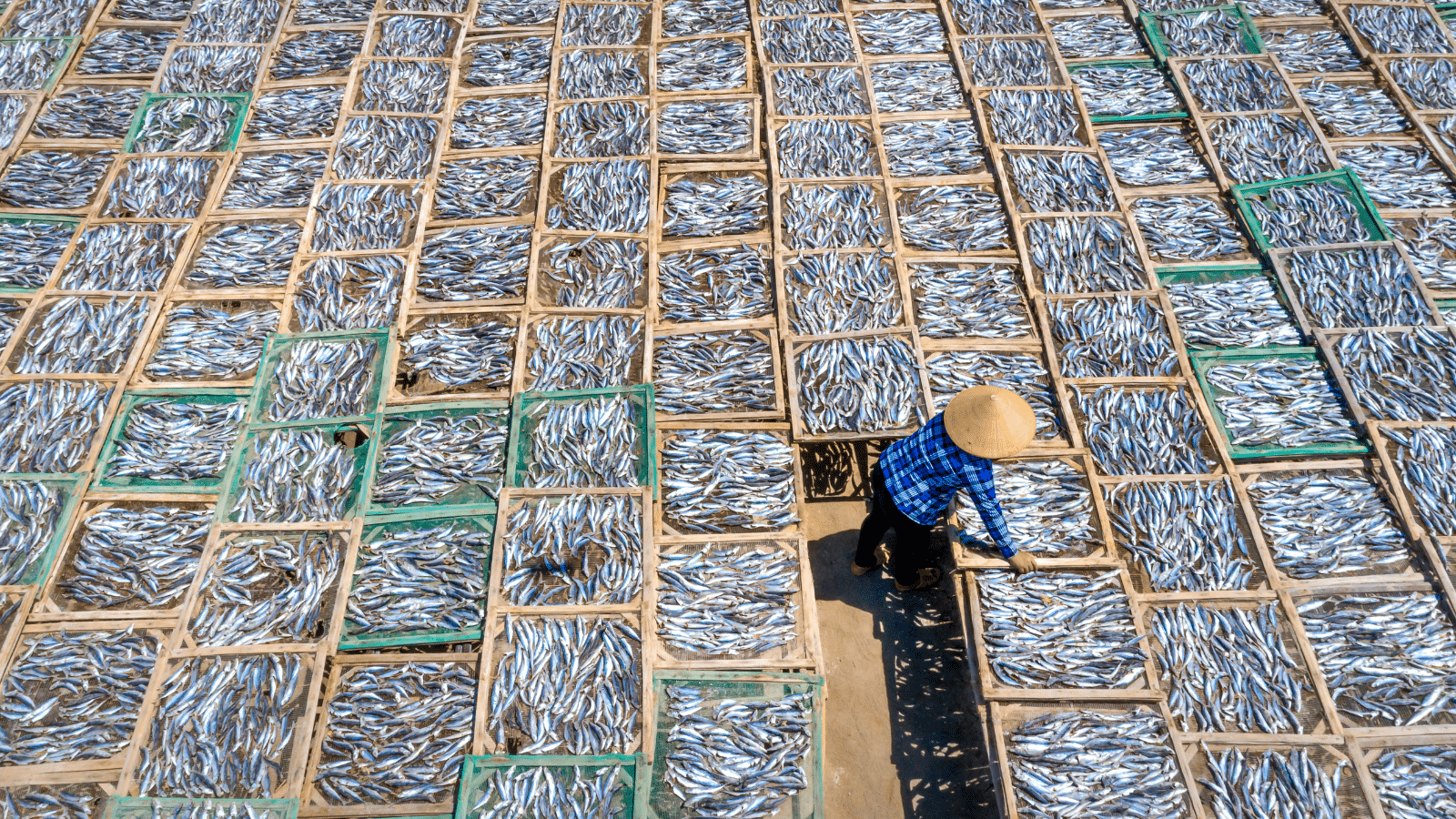
The Commission recently approved the granting of EUR 5.4 million of individual ad-hoc aid to the Dutch auction house Visveiling Urk [VU], an SME located at the town of Urk on the coast of Ijsselmeer. VU auctions the daily catch of fish.

The purpose of the aid was to enable VU to modernise its facilities and improve the handling of fish and more specifically, “(19) the infrastructure related to the distribution and processing of fish marketed through the fish auction hall”. 

Funding gap 

The amount of the aid was determined on the basis of a funding gap analysis. The eligible costs were: Earthworks, construction of building, building installations, cooling and freezing equipment, warehouse shelving, solar panels, lifting equipment and other machinery, general costs, and corporate income tax over the subsidy. The Commission decision does not indicate the precise amount of eligible costs, but only a range of EUR 11-14 million. The aid intensity is also given in the range of EUR 30%-40%. 

The factual scenario comprised the project. The counterfactual scenario consisted of no alternative project. Therefore, the funding gap was the difference between the discounted costs of the project and the discounted revenue, over the life-time of the project. According to the Commission, “(26) the Dutch authorities explained that if it had been financially possible for the beneficiary to finance the investment itself, it would have done so, since the development of land-based fishing related activities has started a few years ago without government intervention.”

However, for two reasons, it is questionable whether indeed there was no counterfactual scenario. First, as paragraph 20 of the decision indicates, the project also aimed to improve the safety of fish handling and lower spoilage. However, it does not indicate whether the safety improvements were legally mandated. Nor, does the decision clarify whether such improvements effected the revenue stream. “(20) According to the Dutch authorities the measure aims to optimise the distribution space and warehouse shelving and minimise the risk of accidents by improving the safety and working conditions. The investments would lead to an improvement of the quality control and traceability of the landed products due to the better storage facilities and circumstances. The improved storage processes will also reduce the environmental burden. Moreover, the installation of solar panels will improve the energy efficiency of the fish auction hall requiring a lot of electricity.

Second, paragraph 21 of the decision further suggests that the future of VU was at stake. It is possible, therefore, that the scope of the counterfactual scenario should not have been just zero revenue and costs but worsening of the existing revenue stream and possible exit from the market with significant loss of income. In such a scenario where state aid prevents future losses, the funding gap could be significantly smaller. “(21) These investments are necessary to achieve the objectives of the measure, considering the general challenges fish auction halls and the fishery sector are facing. The auction hall itself is under increasing pressure due to higher landings and modern quality requirements. The facilities have become outdated and no longer meet contemporary needs in terms of efficiency, food safety, and digital integration. Thus, the measure is intended to foster the development of the fish auction hall by way of improving its infrastructure.” 

At any rate, the funding gap was the NPV of factual scenario minus the NPV of the counterfactual scenario, or 

FG = EUR – 5.4 million – 0 = EUR – 5.4 million 

The funding gap with state aid was still slightly less than EUR 5.4 million. 

The discount rate that was used to calculate the funding gap was VU’s weighted average costs of capital [WACC]; i.e. the weighted cost of its equity and debt. The WACC was estimated as follows: 

  • E = equity = 6.436 
  • D = debt = 10.237 
  • rf = risk free rate 0.76%* 
  • Unlevered beta = 0.94 
  • ERP = equity risk premium = 4.12%* 
  • DP = debt premium = 3.30%** 
  • T = corporate tax rate = 25.80% 

* The rf and ERP values were drawn from the Innovation Fund Relevant Costs Methodology, 2024. 

** The DP was calculated by taking a bank offer received by VU for a long-term loan, minus the risk-free rate as included in this WACC calculation. 

The above values led to the following results: 

  • β = equity beta = 2.05 
  • Cost of equity = 9.2% 
  • E/(D+E) = 38.6% 
  • Cost of debt (after tax) = 3.0% 
  • D/(D+E) = 61.4% 
  • WACC = 5.4% 

Safeguards

The state aid would be granted only of the internal rate of return [IRR] of the investment would not exceed the normal rates of return applied by VU to other similar investment projects or the cost of capital of VU or beyond the rates of return normally observed in the sector. It should be noted that the IRR takes into account the future cash flows the investor expects to receive over the lifetime of the project. The decisions does not indicate what was the derived IRR. It only mentions that “(47) the IRR in the presence of the aid constitutes […]%, which does not exceed the WACC ([…])” that was calculated on the basis of the values indicated above.

Assessment of the compatibility of the state aid with the internal market

The Commission assessed the compatibility of the aid on the basis of the fisheries guidelines and Article 29 of the fisheries block exemption regulation [Reg 2022/2473] [FIBER], because section 3.2 of the guidelines refers to “Aid for categories of measures covered by Regulations on block exemptions”. 

The Commission found that the aid promoted the development of an economic activity, the aided measure and the conditions attached to it did not infringe any other provision of EU law, the aid was appropriate and necessary, it had an incentive effect and was proportional because it did not exceed the funding gap, and since the aid did not enable VU to expand its activities, the distortion caused by the aid was minimised.
Tags

About

Phedon Nicolaides

Dr. Nicolaides was educated in the United States, the Netherlands and the United Kingdom. He has a PhD in Economics and a PhD in Law. He is professor at the University of Maastricht and the University of Nicosia. He has published extensively on European integration, competition policy and State aid. He is also on the editorial boards of several journals. Dr. Nicolaides has organised seminars and workshops in many different Member States, and has acted as consultant to several public authorities.

Leave a Reply

Related Posts

18. Nov 2025
State Aid Uncovered by Phedon Nicolaides
State Aid to Support an Intermodal Terminal whose Development Had Already Started - State Aid Uncovered photos 78

State Aid to Support an Intermodal Terminal whose Development Had Already Started

Introduction State aid that is granted after the start of works lacks incentive effect and cannot be compatible with the internal market. However, state aid may enable the expansion of a project that has already started. The aid may be compatible if the expansion was not foreseen when the project was launched and if the subsidised costs are different from […]
21. Oct 2025
State Aid Uncovered by Phedon Nicolaides
State Aid for Decarbonisation of Steel Works - Your paragraph text 1

State Aid for Decarbonisation of Steel Works

Introduction  The decarbonisation of industry receives the second largest amount of environmental aid after reduction of environmental and energy taxes. Across different industrial sectors, the decarbonisation of steel production has probably attracted the largest amount of aid.  Recently, Sweden notified an individual measure to support investment in decarbonisation at SSAB, a steel manufacturer. The measure was approved by the Commission […]
07. Oct 2025
State Aid Uncovered by Phedon Nicolaides
Extra Aid to a Project that Has Already Started - State Aid Uncovered photos 70

Extra Aid to a Project that Has Already Started

Introduction State aid is not supposed to be granted to a project after work has already started because it lacks incentive effect. But when the project incurs unexpected costs, it is socially important so that it cannot be abandoned and without the aid it becomes commercially unviable, then the Commission may authorise additional aid. In March 2022, the Commission approved […]
16. Sep 2025
State Aid Uncovered by Phedon Nicolaides
Research and Economic Activities - State Aid Uncovered photos 67

Research and Economic Activities

Introduction The Netherlands notified an unusual measure to the Commission. The measure concerned the construction and operation of a research reactor and of an isotope processing facility in Petten in north Netherlands – the so-called PALLAS project. Although there are many nuclear reactors in Europe, very few are used for research purposes and for the production of isotopes for medical […]
24. Jun 2025
State Aid Uncovered by Phedon Nicolaides
Public Support for Infrastructure - State Aid Uncovered photos 56

Public Support for Infrastructure

Introduction Normally, each weekly article reviews just one court judgment or Commission decision. This article deviates from normal practice. It reviews three recent Commission decisions on three different French measures of support of port infrastructure: SA.115739: Direct inland waterway access to Port of Le Havre [April 2025][1] SA.113270: Investment aid to the port of Dunkirk [December 2025][2] SA.111060: Modernisation of […]
20. May 2025
State Aid Uncovered by Phedon Nicolaides
Calculation of the Funding Gap of District Heating Projects - State Aid Uncovered photos 51

Calculation of the Funding Gap of District Heating Projects

Introduction The European Commission recently approved a modification of a Czech scheme for the support of district heating [SA.118343]. The modification concerned an increase of the original budget due to a) a significant rise of carbon allowance prices, b) a higher than expected demand for aid and c) strategic shifts towards accelerated decarbonisation. The original scheme is authorised by decision […]
05. Nov 2024
State Aid Uncovered by Phedon Nicolaides
State Aid to Support “Applied Research” in Solid-State Batteries - State Aid Uncovered photos 11

State Aid to Support “Applied Research” in Solid-State Batteries

Introduction France notified a measure to grant State aid to ProLogium for the implementation of the Promotheus R&D project which concerned the development of solid-state batteries [SSB] for electric vehicles. ProLogium is a large enterprise with 758 employees. The Commission approved the measure in decision SA.106740.[1] The aid measure has several unusual features. First, ProLogium committed to disseminate the scientific […]
24. Sep 2024
State Aid Uncovered by Phedon Nicolaides
Calculation of the Funding Gap of an Infrastructure Project that May also Benefit from Future Public Funding - State Aid Uncovered photos 12

Calculation of the Funding Gap of an Infrastructure Project that May also Benefit from Future Public Funding

Introduction The Commission recently approved State aid granted by Czech Republic for the construction of a multifunctional arena in Brno, with a capacity of 13300 visitors [see SA.58891]. The aid measure was unusual because it foresaw possible future public funding to cover certain financial costs in case the net operating revenue would not be enough. However, the Commission approved possible […]
09. Apr 2024
State Aid Uncovered by Phedon Nicolaides
An Innovative Risk-Sharing Tool for the Support of an LNG Terminal - State Aid Uncovered photos 8

An Innovative Risk-Sharing Tool for the Support of an LNG Terminal

Introduction The Commission, in decision SA.102163, authorised State aid for the construction of a terminal for liquefied natural gas [LNG] in Brunsbüttel, Germany.1 The project consists of an LNG import, storage and distribution facility with annual capacity of about 10 billion m3. The project is carried out by the German LNG Terminal GmbH [GLNG] which has three shareholders: the Dutch […]
26. Mar 2024
State Aid Uncovered by Phedon Nicolaides
Applying the Funding Gap Method to an Important Project of Common European Interest – Part II - State Aid Uncovered photos 7

Applying the Funding Gap Method to an Important Project of Common European Interest – Part II

Introduction On 28 February 2024, the General Court delivered an important judgment in case T-390/20, Scandlines v Commission.(1) The judgment is important because it interpreted the Commission guidelines on Important Projects of Common European Interest [IPCEI], the funding gap methodology for determining the necessary amount of aid and the 2008 Commission Notice on state guarantees. Scandlines sought annulment of Commission […]