

State Aid Law Blog

State Aid Uncovered Blog

In Lexxion’s State Aid Uncovered blog, Prof. Phedon Nicolaides publishes weekly critical analyses of recent State aid judgments and decisions. Each post presents the key points of a court judgment or EU Commission decision, places it in the context of similar case law or practice, assesses the underlying reasoning and highlights any inconsistencies or contradictions.

Guest contributions from other State aid experts will also be published on the blog at irregular intervals to complement the content of the blog posts.

Subscribe now!

The Concept of “Undertaking in Difficulty” and Evidential Requirements

The “subscribed share capital” of a company includes the capital that is already paid and any future amount that shareholders have irrevocably committed to pay. Introduction Undertakings in difficulty may not receive any kind of aid except aid to compensate for damage caused by a natural disaster or exceptional occurrence and, under strict conditions, rescue and/or restructuring aid. In most […]

Security of Energy Supply

Guaranteed supply of electricity at fixed prices to a state-owned network operator involves a transfer of state resources to the supplier. Guaranteed supply of electricity at fixed prices confers an advantage to the supplier. Introduction Member States are allowed to take measures to ensure the security of energy supplies. There is a variety of such measures: imposition of obligations on […]

Compensation for Damage and De Minimis Aid

Compensation for damage caused by protected animals is State aid. Member States may categorise compensatory payments as de minimis aid and refuse to make payments in excess of the de minimis threshold. Introduction Advantage in the meaning of Article 107(1) TFEU is any benefit granted by the state that is not available under normal market conditions. Normal market conditions are […]

Compensation and State Aid

An event that causes damage for which the state is liable is distinct from the act that confers the right for compensation. Introduction The concept of State aid covers all resources that are controlled by the state, regardless of the reason why such resources may be transferred to or put at the disposal of an undertaking. On 25 January 2022, […]

The Mysterious “Substantial” Competitive Effect

State aid has a “substantial” effect on competitors when it has a direct and negative impact on their market positions that goes beyond the typical influence of aid on competitive relationships. Introduction State aid always harms competition and competitors. A public measure that has no effect on competition is not State aid. Therefore, it is not enough for a company […]

I. The Commission Need not Always Open the Formal Investigation Procedure before Correcting a Faulty Decision II. Fines for Failure to Recover Incompatible Aid

The formal investigation procedure need not be re-opened when the fault lies in the legal assessment of the measure in question. Incompatible State aid has to be recovered quickly and effectively, even from insolvent undertakings. Introduction This article examines two recent judgments concerning Greece. The first judgment explains when the Commission does not have to re-open the formal investigation procedure […]

Duplication of Infrastructure Does not Promote Regional Development

A private investor is not interested in regional development. A private investor recoups its investment in infrastructure from revenue from the operation of that infrastructure. Duplication of infrastructure does not contribute to regional development. Introduction In 2015 the European Commission caused a buzz in the State aid community when it decided that investment aid granted to a small Polish airport […]

A Non-Selective Financial Tax with a Narrow Scope

The scope of a tax must be objectively defined in order for those excluded from the tax not to benefit from a selective advantage. Introduction Taxes are burdens, so they fall outside the scope of Article 107(1) TFEU which prohibits selective benefits funded with state resources. Normally, Article 107(1) applies to benefits from tax exemptions or tax derogations which result […]

Private Creditor and the Ability of the Debtor to Repay

There are no rules as to the promptness with which a private creditor must act in order to enforce its claims. However, a hypothetical private creditor need not demand that a debtor be declared insolvent as soon as it fails, without taking any account of its longer-term potential. Introduction When the state accepts to restructure debt owed to it or […]

Public Funding of an Energy Infrastructure Project

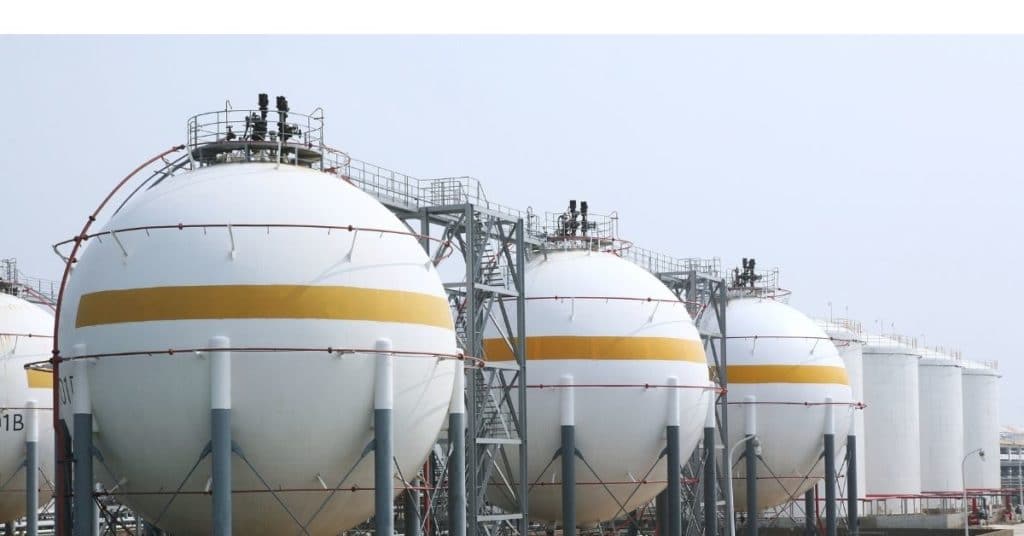
State aid up to 100% of the funding gap of a project can be compatible with the internal market. Introduction The European Commission approved investment aid for a Liquefied Natural Gas [LNG] terminal in Alexandroupolis in northern Greece [case SA.55526]. The project involves the following: A Floating Storage Regasification Unit [FSRU] for the storage and regasification of LNG. The construction […]

Economic Continuity and Recovery of Indirect State Aid

Special insolvency procedures can confer a selective advantage that constitutes State aid. A recovery order can be extended to the new owner of a company that had received incompatible State aid. Introduction Recipients of State aid that is found to be incompatible with the internal market have to pay it back with interest. This liability for repayment also extend to […]

The Impossibility of Proving the Absolute Impossibility to Recover Incompatible State Aid

It is not sufficient to claim that is it absolutely impossible to recover incompatible State aid. It must be shown that alternative methods have been actually tried without success. Introduction It is rather impossible for Member States to prove that it is absolutely impossible to recover State aid that has been found by the Commission, and confirmed by EU courts, […]

Compensation for Universal Service Provision

As long as the compensation does not exceed the net extra costs of the universal service activities, it may be used to offset other costs. Introduction The rules on State aid for services of general economic interest [SGEI] are very generous because they allow both investment and operating aid. Yet, it is not easy to comply with those rules because […]

State Aid and Essential National Interest

State aid that is necessary for protecting essential national interests can be compatible with the internal market. Introduction State aid should support outcomes that the market by itself cannot achieve. This implies that State aid that is restricted to only one or a few undertakings is unlikely to be capable of delivering the desired outcome. Yet, sometimes there may be […]

State Aid Measures May not be Funded through Discriminatory Taxes

A tax that is levied on both imported and domestic products but its revenue finances only domestic products infringes fundamental provisions of the EU Treaty. Introduction Member States finance the generation of electricity from renewable energy sources [RES] with revenue they raise through levies or charges on consumers of electricity. On 14 April 2021, the General Court in judgment in […]

Turnover Taxes Can Be Progressive without Being Selective

Progressive rates can be part of a reference tax system. The reference tax system is, in principle, made up of the tax base, the tax rates and the taxable events. Introduction Progressive turnover taxes were thought to be selective because they are levied on gross revenue before costs are deducted and larger volumes of revenue are taxed at higher rates. […]

Individual Aid Measures to Combat Covid-19

Aid to remedy a serious economic disturbance may be granted to a single company that is important for the national economy. EU law does not extend to competitors a right to the same aid. Introduction Between March 2020 and April 2021, the European Commission has authorised aid totalling more than EUR 2.5 trillion to remedy the serious economic disturbance caused […]

Draft New RDI Framework

The new RDI Framework provides continuity with clarity. On Monday, 19 April 2021, the European Commission published the new Regional Aid Guidelines for the period 2022-2027. They can be accessed at: https://ec.europa.eu/competition/state_aid/regional_aid/RAG_2021_adopted_communication.zip Introduction On 8 April 2021, the European Commission published the text of the draft new RDI Framework and launched public consultation.[1] The draft RDI Framework is accompanied by […]

State Guarantee to an Energy Project

A state guarantee can bridge the funding gap of an infrastructure project. Introduction State aid rules allow energy infrastructure projects to be supported by as much aid as is necessary to bridge their “funding gap”; i.e. the difference between the initial investment cost and the present value of their expected net operating revenue which is the future gross revenue minus […]

Lease Contracts and Competitive Selection

Vague award criteria can be discriminatory and harm the transparency of the selection procedure. Introduction After receiving a complaint, the Commission opened a formal investigation into alleged State aid granted by the Estonian Ministry of Rural Affairs to AS Tartu Agro, a private limited company, which produced milk, meat and cereals. According to the complaint, the Ministry had granted unlawful […]

Subscribe to our newsletter for updates on legal developments, upcoming conferences, workshops, and publications in your areas of interest.

Newsletter: Subscribe now