

State Aid Law Blog

State Aid Uncovered Blog

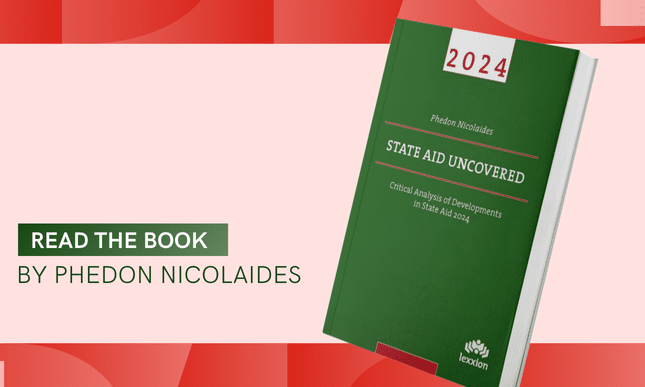
In Lexxion’s State Aid Uncovered blog, Prof. Phedon Nicolaides publishes weekly critical analyses of recent State aid judgments and decisions. Each post presents the key points of a court judgment or EU Commission decision, places it in the context of similar case law or practice, assesses the underlying reasoning and highlights any inconsistencies or contradictions.

Guest contributions from other State aid experts will also be published on the blog at irregular intervals to complement the content of the blog posts.

Subscribe now!

State-Aid Free Investment: Pari Passu or Benchmarked against Market Return

Introduction The Finnish state owned 100% of four different companies which operated risk capital and private equity. One of those four companies was “Tesi”. Finland proposed the consolidation of the other three companies – with an estimated value of EUR 500 million – into Tesi. In addition, Finland intended to inject extra capital of EUR 300 million in Tesi. For […]

The Date State Aid Is Granted

Introduction The date on which State aid is deemed to have been granted is a critical issue when aid is found to be incompatible with the internal market and has to be recovered. It is also critical when an approved aid scheme expires after the application for aid is submitted but before the aid is granted. On 3 July 2025, […]

Linked Enterprises through Relationships between Natural Persons

Introduction A perennial issue facing aid-granting authorities is whether the aid applicants are SMEs. A mis-assessment of the SME status can have dire consequences as demonstrated by a Commission decision in May 2025 concerning State aid granted by Germany to sawmill Abalon Hardwood Hessen [AHH] [SA.24030]. The Commission found the aid to be incompatible with the internal market and ordered […]

Selectivity and the Reference System

Introduction A public measure must be selective and satisfy the other criteria of Article 107(1) TFEU in order to be classified as State aid. The detection of selectivity requires a comparative exercise: a comparison of the aid beneficiary or beneficiaries with non-aid beneficiaries. But which non-aid beneficiaries to take into account. The answer is those who are in a similar […]

How to Measure the Damage Caused by an Exceptional Occurrence

On 25 June 2025, the General Court, in case T‑366/22, Ryanair v Commission, dismissed the action brought by Ryanair seeking the annulment of Commission decision SA.56867.[1] That decision authorised compensation under Article 107(2)(b) TFEU for damage suffered by the German airline Condor as a result of the covid-19 pandemic. However, Condor had been in financial trouble long before the outbreak of the […]

The Principles of Legal Certainty and Protection of Legitimate Expectations

Introduction The Commission, like all EU institutions, must respect the principles of legal certainty and protection of legitimate expectations. In the field of State aid, those principles mean, among other things, that in practice the Commission cannot reopen a State aid case if there is no change in the measure in question. On 26 June 2025, the Court of Justice […]

Deductions from the Tax Base Are not Necessarily Selective

Introduction Member States may design their tax system as they wish, as long as they conform with State aid rules. Tax systems do not only contain taxes but also exceptions from taxes or tax bases. Exceptions that apply to any tax payer are not selective in the meaning of Article 107(1) TFEU. For example, deduction from taxable income of the […]

A Finnish Tax on Sugary Drinks is not Selective

Introduction Several Member States have taxed or want to tax soft drinks with added sugar. They are one of the causes of obesity without having any nutritional value. The problem is how to tax the sugary drinks without the tax being considered as State aid for the drinks that are not taxed. A recent measure implemented by Finland provides guidance […]

Commission Approves State Aid after a Project Has Started

Introduction A fundamental rule of State aid is that no aid may be granted after a project has already started. This rule is repeated in every Commission regulation or set of guidelines. Aid to a project that has already started lacks incentive effect and as such it is a pure waste of public money. However, in December 2022, the Court […]

Public Support for Infrastructure

Introduction Normally, each weekly article reviews just one court judgment or Commission decision. This article deviates from normal practice. It reviews three recent Commission decisions on three different French measures of support of port infrastructure: SA.115739: Direct inland waterway access to Port of Le Havre [April 2025][1] SA.113270: Investment aid to the port of Dunkirk [December 2025][2] SA.111060: Modernisation of […]

Tax Exemptions for Public Casinos

Introduction The Commission, in decision 2025/317, spanning 60 pages with close to 300 recitals and concerning the special tax treatment of public casino operators in Germany, found that that treatment constituted unlawful and incompatible State aid that had to be recovered.[1] Following a complaint by the German association of gambling machine operators [Fachverband Spielhallen], the Commission examined i) special tax […]

The Granting of Rescue Aid to a Member of a Company Group

Introduction State aid to rescue a company and finance its restructuring is considered to be the most distortionary form of aid. However, it is allowed only to prevent serious social harm and only after notification to and assessment by the Commission. The compatibility assessment is always exhaustive and seeks to establish, among other things, whether State aid is the only […]

Individual Aid to Support Reduction of CO2 Emissions

Introduction State aid rules are, in general, less favourable to large companies mostly because they have more own funds, access to cheaper finance [mostly due to longer track record and higher credit ratings] and are more mobile so that regional handicaps have a lesser effect on them. Size also brings other advantages such as the ability to hire top economic […]

What Competitors Must Show in order to Be Able to Challenge a Commission Decision on State Aid

Introduction A perennial question is whether competitors of aid recipients have legal standing to appeal against Commission decisions that either authorise aid or find that a public measure does not constitute State aid. The answer depends on whether the Commission decision is adopted without the opening of the formal investigation procedure or after a form investigation. It is easier to […]

The Court of Justice Misses an Opportunity to Provide Guidance on how to Detect Possible Infringement of other Provisions of EU Law by State Aid Measures

Introduction On 23 January 2025, the Court of Justice delivered its judgment in case C‑490/23 P, Neos v Ryanair.[1] Neos, a private airline licensed in Italy, appealed against the judgment of the General Court in case T-268/21, Ryanair v Commission, by which it annulled Commission decision SA.59029 concerning an Italian compensation scheme for airlines with an Italian operating licence.[2] The […]

Offshore Wind Installations

Introduction State aid to support the generation of electricity from renewable sources must, as standard practice, be granted on the basis of a competitive selection process whereby the most efficient operator gets aid first. With a binding budget, the least efficient operators are excluded. However, there is an exception to this rule for small installations and in situations where there […]

Incompatible State Aid May Be Recovered from an Undertaking other than the Direct Recipient

Introduction The first judgment of 2025 on State aid was rendered by the Cour of Justice of the EU [CJEU] in case C-588/23, Scai, on 16 January 2025. It was a response to a request for a preliminary ruling by an Italian court.[1] Scai had initiated legal proceedings before a national court to contest a request by Regione Campania for […]

Accelerated Rollout of Renewable Energy

Introduction The Temporary Crisis and Transition Framework for State aid expired on 31 December 2024. However, certain provisions remain in force until 31 December 2025. Those provisions are the following: Section 2.5.1: Investment aid for accelerating the rollout of renewable energy and for energy storage. Section 2.5.2: Operating aid for accelerating the rollout of renewable energy and for energy storage. […]

The Problem of Compensatory State Aid

Introduction During the covid-19 pandemic there were fewer bankruptcies than normal. The consensus opinion is that the vast amounts of liquidity that were pumped into EU economies saved not only healthy companies but also many of those that would have otherwise gone out of business. Although the large-scale support schemes were necessary, they also created a problem: how to separate […]

Does the State not Control the Resources whose Use Is Defined by Law?

Introduction Germany has been very creative in devising measures of support of renewable sources of energy that do not constitute State aid [see the landmark judgments in PreussenElektra, EEG2012, etc]. The decisive element in those measures was the absence of state resources. In January of this year, Germany succeeded to persuade the General Court that a new measure was also […]

The Interpretation of Conflicting Norms regarding the Validity of State Aid Infolding Contracts Must Be Consistent with the Safeguard of Individual Rights Created by EU State Aid Law (C 505/14, Klausner)

The following blog post is another contributory piece by Emanuela Matei, Associate Researcher at the Centre of European Legal Studies, Bucharest. Matei holds a Juris Master in European Business Law (Lund University, June 2012), a Magister legum (Lund University, June 2010) and a BSc in Economics & Business Administration (Lund University, June 2009). We are very glad to welcome her […]

Summary of Lexxion Seminar: State aid for Tax Measures on 26-27 October 2015, Brussels

The following is a summary of the main points that were presented and the issues that were discussed in the seminar on State aid in Tax Measures that was held in Brussels on 26-27 October 2015. The summary has been prepared for information purposes only and it is not meant to be a precise record of the proceedings of the […]

Court’s Diary – November 2015

Find below the court’s diary for all State aid cases. Would you like to write a comment on one of them? Please don’t hesitate and get in touch with us ([email protected]), we are happy to publish your comment on the blog.   Wednesday 11/11/2015 Judgment in Case C-505/14 – Klausner Holz Niedersachsen (Court of Justice – Second Chamber) Thursday 12/11/2015 Judgment in […]

A new misnomer in State aid law: single economic unit with separate legal personality (C 357/14 P, Dunamenti Erőmű/Commission)

The following blog post is a contributory piece by Emanuela Matei, Associate Researcher at the Centre of European Legal Studies, Bucharest. Matei holds a Juris Master in European Business Law (Lund University, June 2012), a Magister legum (Lund University, June 2010) and a BSc in Economics & Business Administration (Lund University, June 2009). We are very glad to welcome her […]

Courts’s Diary – October 2015

Any comments on #Stateaid? Get in touch: Stateaidhub[at]lexxion.eu   Thursday 01/10/2015 Judgment in Case C-357/14 P – Electrabel and Dunamenti Erőmű v Commission (Court of Justice – Third Chamber)   Tuesday 06/10/2015 Judgment in Case C-303/13 P – Andersen v Commission (Court of Justice – Grand Chamber)   Thursday 08/10/2015 Hearing in Joined Cases T-479/11 & T-157/12 – France v Commission, […]

How Reasonable The Private Investor May Be Assumed To Be? Corsica Ferries France

The following article summary is a contributory piece by Gian Marco Galletti. The full piece was published in the Common Market Law Review. Galletti is working as a researcher at the Dickson Poon School of Law since 2013. He is currently working on a PhD in European law under the supervision of Prof. Andrea Biondi. He holds an LLB with […]

Court’s Diary – September 2015

Any comments on #Stateaid? Get in touch: Stateaidhub[at]lexxion.eu   Thursday 03/09/2015   Judgment in Case C-89/14 – A2A (Court of Justice – Fifth Chamber)Tuesday 08/09/2015 Hearing in Case T-103/14 – Frucona Košice v Commission (General Court – Second Chamber)Thursday 17/09/2015 Judgment in Case C-33/14 P – Mory and Others v Commission (Court of Justice – Third Chamber)   Friday 18/09/2015 Judgment […]

Court’s Diary – July 2015

Any comments on #Stateaid? Get in touch: Stateaidhub[at]lexxion.de Wednesday 01/07/2015 Opinion in Case C-357/14 P Dunamenti Erőmű v Commission (Court of Justice – Third Chamber)   Thursday 02/07/2015 Judgment in Joined cases T-425/04 RENV France v Commission, T-444/04 RENV Orange v Commission (General Court – Sixth Chamber, Extended Composition)   Wednesday 08/07/2015 Hearing in Case T-287/11 Heitkamp BauHolding v Commission (General Court – Ninth […]

EStAL Best Reviewer Award 2014/2015

Last week our 13th Experts’ Forum on New Developments in European State Aid Law took place. From 10th to 12th June 2015 a group of enthusiastic professionals interested in State Aid gathered at the Club of the University Foundation in Brussels to discuss the most recent issues on the topic. In the realm of this conference, we were proud to announce our […]

Court’s Diary – June 2015

Any comments on #Stateaid? Get in touch: Stateaidhub[at]lexxion.eu Thursday 04/06/2015 Judgment in Case C-15/14 P Commission v MOL (Court of Justice – First Chamber)   Tuesday 09/06/2015 Hearing in Case T-515/13 Spain v Commission (General Court – Seventh Chamber)   Wednesday 10/06/2015 Hearing in Case C-367/14 Commission v Italy (Court of Justice – Third Chamber) Hearing in Case T-719/13 Lico Leasing and Pequeños y […]

Subscribe to our newsletter for updates on legal developments, upcoming conferences, workshops, and publications in your areas of interest.

Newsletter: Subscribe now