


Europäisches Beihilfenrecht Blog

State Aid Uncovered Blog

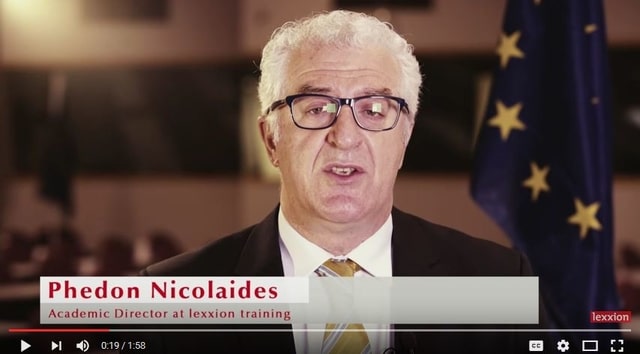
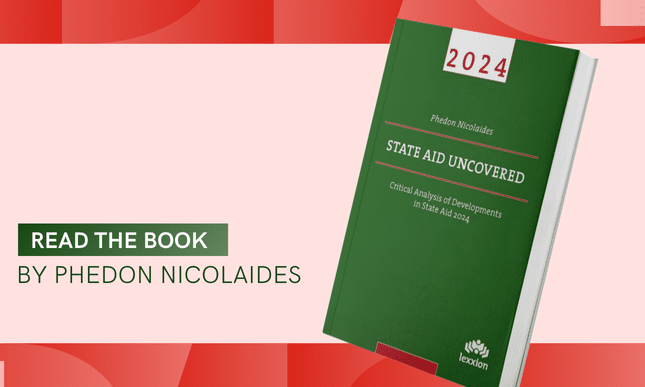
In Lexxions Blog „State Aid Uncovered” veröffentlicht Prof. Phedon Nicolaides wöchentlich kritische Analysen zu den neuesten Urteilen und Entscheidungen zu staatlichen Beihilfen. Jeder Beitrag stellt die wichtigsten Punkte eines Gerichtsurteils oder einer EU-Kommissionsentscheidung vor, ordnet sie in den Kontext ähnlicher Rechtsprechung oder Praxis ein, bewertet die zugrundeliegende Argumentation und zeigt etwaige Ungereimtheiten oder Widersprüche auf.

In loser Folge werden auf diesem Blog auch Gastbeiträge von anderen Experten für staatliche Beihilfen veröffentlicht, welche die Inhalte der Blogbeiträge ergänzen.

Jetzt abonnieren!

Professor at Maastricht University; Professor at University of Nicosia, and Academic Director at Lexxion Training

State Aid Is Not Compatible With the Internal Market when it Contravenes other EU Rules

Relief from a penalty imposed by EU rules is State aid that is incompatible with the internal market.   Introduction EU rules contain a standard exclusion: State aid cannot be declared compatible with the internal market when it is non-severable [i.e. cannot be separated] from a violation of EU law. Yet, cases involving non-severable violations of EU law are rare. […]

Exceptions to the Exceptional Nature of State Aid for Banks

State aid for banks can be granted without triggering resolution in cases of precautionary recapitalisation and liquidation.   Introduction A primary objective of the European response to the financial crisis was to sever the link between troubled banks and indebted sovereign. The principle now is that if a bank needs money to meet the capital adequacy ratio required by banking […]

15th Jubilee Feature – State Aid Experts Paying Court to EStAL: Mihalis Kekelekis

Since 2002 Lexxion Publisher’s European State Aid Law Quarterly – EStAL serves as a forum for dialogue and deliberation on all issues related to State aid. On the occasion of our 15th anniversary special feature we have gathered our State aid family to reflect upon their joint journey together with our precious EStAL and of course our favourite topic State […]

Sale of State-Owned Bank

The sale of a public asset is free of State aid when it is open, transparent, non-discriminatory, unconditional and the award is made to the highest binding and credible offer.   Introduction The rules on State aid to financial institutions and banks have become very strict. Owners and creditors have to be bailed in [the so-called burden sharing] and the […]

Collective Insolvency and the GBER

The eligibility of an aid applicant and the legality of the aid are determined at the point when the aid is granted. If afterwards the aid recipient ceases to be an SME or enters in financial difficulties it is not a relevant issue.   Introduction When Member States grant aid on the basis of the General Block Exemption Regulation [Regulation […]

15th Jubilee Feature – State Aid Experts Paying Court to EStAL: Birgit Haslinger

Since 2002 Lexxion Publisher’s European State Aid Law Quarterly – EStAL serves as a forum for dialogue and deliberation on all issues related to State aid. On the occasion of our 15th anniversary special feature we have gathered our State aid family to reflect upon their joint journey together with our precious EStAL and of course our favourite topic State […]

Transfer of Trademarks

The free transfer of a trademark that belongs to the state confers two possible advantages to the new owner if there is a market for that trademark.   Introduction When a public authority places at the disposal of an undertaking a public asset, it confers to that undertaking a competitive advantage. The competitive advantage is eliminated whenever that public authority […]

Even the Catholic Church Is not Absolved from State Aid Rules: The Essence of Economic Activity – PART II

Purely religious activities and education funded by the state are not economic in nature.   Read the I. part of the article, here. Selective economic advantage The Court proceeded to examine the possible existence of a selective economic advantage. It first recalled, in paragraph 65, that the concept of State aid covers only those public measures which favour certain undertakings “or” […]

Even the Catholic Church Is not Absolved from State Aid Rules: The Essence of Economic Activity – PART I

Purely religious activities and education funded by the state are not economic in nature. Introduction On 27 June 2017 the Court of Justice ruled in case C‑74/16, Congregación de Escuelas Pías Provincia Betania v Ayuntamiento de Getafe.[1] The ruling was in response to a request from a Spanish administrative court dealing with a tax dispute between religious schools and the municipality of […]

15th Jubilee Feature – State Aid Experts Paying Court to EStAL: Ilkka Aalto-Setälä

Since 2002 Lexxion Publisher’s European State Aid Law Quarterly – EStAL serves as a forum for dialogue and deliberation on all issues related to State aid. On the occasion of our 15th anniversary special feature we have gathered our State aid family to reflect upon their joint journey together with our precious EStAL and of course our favourite topic State […]

State Aid Rules and Transfer Pricing

Tax rulings on transfer pricing have to approximate market-based outcomes.   Introduction Twenty years ago, the European Commission initiated discussion on how State aid rules could apply to direct taxation. In 1998 it adopted its Notice on direct business taxation. At about the same time the Commission launched several formal investigations which culminated in negative decisions. In 2013 and 2014, […]

New Video: If you want to learn more about State aid issues…

What is State aid? Why do I need to be concerned about State aid? These and many more basic questions will be answered in our videos on YouTube. Make sure to visit us!   7 weeks ago we started our new State aid journey on YouTube and thank you for viewing our videos, commenting and subscribing to our channel! Today […]

Compatible State Aid May Have Negative Effects on some Market Operators

The existence of market failure is not necessary for aid to be declared compatible under Article 107(3). Market failure does not mean that the market is completely unable to supply a good or service. State aid aiming to remedy market failure may be compatible with the internal market even if it has a negative impact on some market operators.   […]

New Video: Which types of State aid are compatible with the internal market?

What is State aid? Why do I need to be concerned about State aid? These and many more basic questions will be answered in our videos on YouTube. Make sure to visit us!   Last week Phedon Nicolaides gave examples of „good aid“. Today he explains which types of State aid are compatible with the internal market, such as environmental aid, regional development […]

State Aid to Electricity Intensive Users

The risk of relocation outside the EU is not accepted as a justification for the granting of State aid.   Introduction The European Commission has had to assess many measures of State aid to producers of electricity from renewable energy sources [RES producers or “green” electricity producers] and to intensive users of electricity [EIUs]. The former have benefitted from investment […]

New Video: When Is State Aid Allowed and What Is „Good Aid“?

What is State aid? Why do I need to be concerned about State aid? These and many more basic questions will be answered in our videos on YouTube. Make sure to visit us!   Last week Phedon Nicolaides gave „Practical Examples of State aid“, today he addresses the question „What type of aid is allowed?“. This aid is called „good aid“. […]

State Aid Modernisation: First Results

There has been an impressive increase in the use of the General Block Exemption Regulation. However, Member States still notify measures which are acknowledged by the Commission with “comfort letters”.   Introduction[1] In May 2012, the European Commission launched its State Aid Modernisation [SAM] initiative. After two years of consultations with the Member States, a set of new State aid […]

New Video: Practical Examples of State Aid

What is State aid? Why do I need to be concerned about State aid? These and many more basic questions will be answered in our videos on YouTube. Make sure to visit us!   After answering the question “Who can grant State aid?” last week, Phedon Nicolaides today gives you some practical examples of State aid such as subsidies by public authorities, […]

PART II: Combining Infrastructure Aid with SGEI Aid

After the spontaneous words on Brexit and State aid last week, I continue with the 2nd part of the post on infrastructure and SGEI today. A provider of services of general economic interest may receive both investment aid and compensation for the extra costs of public service obligations.   Part II: SGEI[1] Member States are free to determine the services […]

New Video: Who Can Grant State Aid?

What is State aid? Why do I need to be concerned about State aid? These and many more basic questions will be answered in our videos on YouTube. Make sure to visit us!   After answering the question “What is State aid?” in his last video, Phedon Nicolaides today speaks about “Who can grant State aid?”. Watch the video, comment and subscribe to […]

Sie möchten einen Beitrag einreichen oder zur Weiterentwicklung des Blogs State Aid Uncovered beitragen? Weitere Details finden Sie auf der englischsprachigen Seite.

Gastbeitrag einreichen

Abonnieren Sie unseren Newsletter für aktuelle Informationen zu Entwicklungen, Konferenzen, Seminaren und Veröffentlichungen in Ihrem Interessenbereich.

Newsletter: Jetzt abonnieren