


Europäisches Beihilfenrecht Blog

State Aid Uncovered Blog

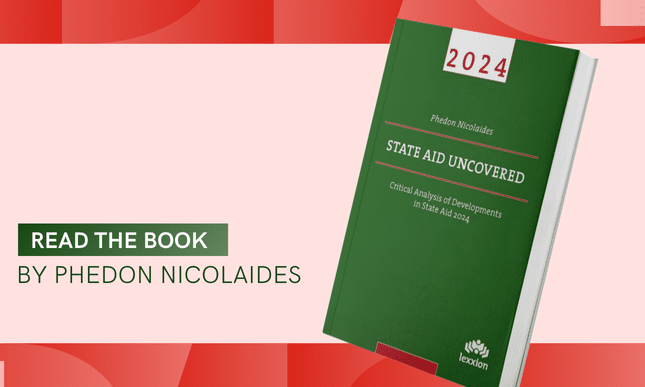
In Lexxions Blog „State Aid Uncovered” veröffentlicht Prof. Phedon Nicolaides wöchentlich kritische Analysen zu den neuesten Urteilen und Entscheidungen zu staatlichen Beihilfen. Jeder Beitrag stellt die wichtigsten Punkte eines Gerichtsurteils oder einer EU-Kommissionsentscheidung vor, ordnet sie in den Kontext ähnlicher Rechtsprechung oder Praxis ein, bewertet die zugrundeliegende Argumentation und zeigt etwaige Ungereimtheiten oder Widersprüche auf.

In loser Folge werden auf diesem Blog auch Gastbeiträge von anderen Experten für staatliche Beihilfen veröffentlicht, welche die Inhalte der Blogbeiträge ergänzen.

Jetzt abonnieren!

Professor at Maastricht University; Professor at University of Nicosia, and Academic Director at Lexxion Training

Funding of Public Hospitals

Public healthcare provided in accordance with the principle of social solidarity is not economic in nature. Introduction There are two sectors where economic and non-economic activities mix and cause potential State aid problems: healthcare and education. Healthcare and education provided by public institutions do not differ much from healthcare and education provided by private institutions. The critical difference is not […]

A First Evaluation of Covid-19 State Aid

There is a significant variation across Member States in terms of the number of aid measures as well as the amount of aid. Introduction On 17 December 2020, the European Parliament published a report evaluating the impact of State aid to combat covid-19.[1] The report was requested by the committee responsible for economic policy. The report is probably the first […]

One Agreement, Two Parallel Systems: Subsidies in the Trade and Cooperation Agreement between the EU and the UK

The agreement on subsidies allows the UK to deviate from EU State aid rules. Introduction After the exit of the United Kingdom [UK] from the European Union [EU] on 31 January 2020, EU State aid rules continued to apply to the UK during a transitional period that came to an end on 31 December 2020. In the closing days of […]

The Time Horizon of a Private Investor

A public authority that claims that it invests for the long term, must still prove that its investment is likely to be profitable. Introduction Public authorities may invest in private companies. However, they need to behave as private investors otherwise they confer an advantage that constitutes State aid. In their defence, public authorities claiming that they act as private investors, […]

Attribution to the State does not necessarily Imply Control by the State

Prices fixed by the state do not necessarily confer control to the state over the private resources which are used to pay those prices. Introduction Judging from how many times EU courts have been asked to interpret the concept of state resources, it seems that one of the most difficult aspects of Article 107(1) TFEU is to determine whether funding […]

The Law, Economics and Art of Compensation for Public Service Obligations

State aid in the form of compensation for public service obligations must exclude any intangible benefits from the obligation, but may include reasonable profit. The Commission guidelines for State aid in agriculture and forestry, the block exemption regulations covering agriculture, forestry, fishery and aquaculture, and the Regulation on de minimis aid for fishery and aquaculture have been prolonged to 31 […]

A Rare Case of Altmark-compliant SGEI (Part II)

For a service to be in the general economic interest, it must be shown to fill a gap in the market or to offer what the market fails to provide adequately. [In case you have missed part I, you can access it here.] Introduction Services of general economic interest [SGEI] are important for the functioning of European societies. However, the […]

A Rare Case of Altmark-compliant SGEI (Part I)

For a service to be in the general economic interest, it must be shown to fill a gap in the market or to offer what the market fails to provide adequately. Introduction Services of general economic interest [SGEI] are important for the functioning of European societies. However, the granting of compensation to an undertaking for the provision of SGEI must […]

De Minimis Aid

If different awards of de minimis aid bring the total amount over the ceiling of EUR 200,000, Member States may withdraw aid already granted or reduce the amount of aid that is scheduled to be granted or simply refuse to grant aid so as to ensure that the total remains below the ceiling for any three-fiscal year period. Introduction A […]

What is the Value of Informal Commission Communications?

An official’s statement can be imputed to his authority if it can be reasonably assumed that the official speaks on behalf of the authority. Introduction It is often asked by national officials how much credence they should give to assurances by Commission officials in the absence of a formal Commission decision and what is the legal value of such assurances. […]

No New Aid to Undertakings that Have not Yet Repaid Incompatible Aid

There is no rule in EU law obliging Member States to grant State aid. The European Commission may refuse to authorise aid until previous aid that was found to be incompatible with the internal market is paid back. Temporary Framework: Number of approved covid-19 measures, as of 16 May 2020: 125* Legal basis: Article 107(2)(b): 10; Article 107(3)(b): 105; Article […]

Advantage Must be Proven, Not Assumed

The European Commission has to consider whether the private investor principle is applicable in cases of state investments. It is for Member States to prove that their investments conform with the private investor principle. Temporary Framework As of 9 May 2020, the European Commission had approved 113 State aid measures to combat covid-19. Their legal basis was: Article 107(2)(b): 10; […]

Non-recovery of Incompatible State aid Is Costly

Legal and practical difficulties in the recovery of incompatible State aid do not constitute justifiable “absolute impossibility”. Temporary Framework On 1 May, the total number of State aid measures to combat covid-19 approved by the European Commission reached 102. Their legal basis was: Article 107(2)(b): 9; Article 107(3)(b): 86; Article 107(3)(c): 7   Introduction The 2020 Temporary Framework for State […]

Identification of Undertakings in Difficulty

A company is in difficulty if, in practice, its accumulated net losses exceed 50% of its subscribed capital, regardless of whether the subscribed capital is formally written down. The classification of a company as being in difficulty is independent of the sector in which it operates and of whether a private investor would be willing to invest in it. Temporary […]

How to Price a Guarantee

The pricing of a guarantee must take into account not only the financial situation of the borrower but also the value of any collateral. Temporary Framework As of 17 April 2020, the European Commission authorised 61 State aid measures from 23 Member States and the UK to combat covid-19.   Introduction State guarantees on loans make up the largest category […]

Errors in State aid Procedures Need not Result in Annulment of a Commission Decision

Interested parties have a right to know how the compatibility of aid with the internal market is assessed. Temporary Framework developments As of 13 April 2020, the European Commission had authorised 51 measures adopted by 23 Member States. According to the statement of the Eurozone finance ministers of 9 April 2020, Member States had provided liquidity in the form of […]

EU Decisions Override National Decisions on Compensation for Public Service Obligations

The principle of res judicata cannot be used to avoid recovery of incompatible State aid.   An update on State aid measures to counter the impact of COVID-19 As of 3 April 2020, the Commission has approved 29 measures submitted by 16 Member States. Article 107(3)(b) is the legal basis for 26 of those measures, while Article 107(2)(b) is the […]

How to Make Good the Damage Caused by a Natural Disaster

Compensation for costs incurred as a result of a natural disaster is State aid. The compensation must be for damage directly caused by the natural disaster. Introduction State aid to make good the damage caused by an “exceptional occurrence” such as the corona virus covid-19 is compatible with the internal market. The legal basis for exemption is Article 107(2)(b). Of […]

A New Temporary State aid Framework to Fight the Effects of the Corona Virus

Member States will be allowed to provide grants, guarantees and loans to companies to alleviate the effects of the corona virus. Introduction At the end of 2009, the European Commission adopted a Temporary Framework of State aid rules to enable Member States to support companies that were harmed by the outbreak of the financial crisis in 2008. Now, the corona […]

Has an Economic Myth Become a Legal Fact? The Case of Turnover Taxes

Progressive turnover taxes are not contrary to the freedom of establishment or the right of equal treatment. Introduction Recent cases involving “turnover” taxes have sparked a debate in the literature and on the conference circuit not only because they raise novel issues but also because of their implications for other taxes which are being mooted by European governments. As Advocate-General […]

Sie möchten einen Beitrag einreichen oder zur Weiterentwicklung des Blogs State Aid Uncovered beitragen? Weitere Details finden Sie auf der englischsprachigen Seite.

Gastbeitrag einreichen

Abonnieren Sie unseren Newsletter für aktuelle Informationen zu Entwicklungen, Konferenzen, Seminaren und Veröffentlichungen in Ihrem Interessenbereich.

Newsletter: Jetzt abonnieren