


Europäisches Beihilfenrecht Blog

State Aid Uncovered Blog

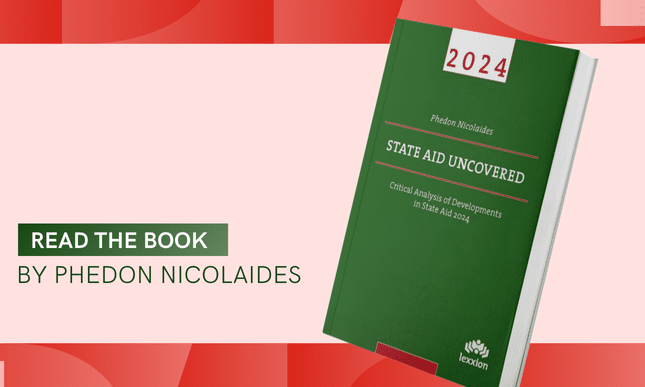
In Lexxions Blog „State Aid Uncovered” veröffentlicht Prof. Phedon Nicolaides wöchentlich kritische Analysen zu den neuesten Urteilen und Entscheidungen zu staatlichen Beihilfen. Jeder Beitrag stellt die wichtigsten Punkte eines Gerichtsurteils oder einer EU-Kommissionsentscheidung vor, ordnet sie in den Kontext ähnlicher Rechtsprechung oder Praxis ein, bewertet die zugrundeliegende Argumentation und zeigt etwaige Ungereimtheiten oder Widersprüche auf.

In loser Folge werden auf diesem Blog auch Gastbeiträge von anderen Experten für staatliche Beihilfen veröffentlicht, welche die Inhalte der Blogbeiträge ergänzen.

Jetzt abonnieren!

Professor at Maastricht University; Professor at University of Nicosia, and Academic Director at Lexxion Training

How to Compensate for the Extra Cost of Public Service Obligations: Step-by-Step Guidance on a Complex Calculation

The “net avoided cost methodology” takes into account only incremental costs. Introduction The two most difficult issues in the design of State aid measures to support services of general economic interest [SGEI] are the proper definition of the public service obligation [PSO] and the identification of the “counterfactual” on the basis of which the public service compensation [PSC] is calculated. […]

State Aid Rules in the UK after Brexit: Alignment or Divergence?

The current rules will apply at least until 31 December 2020. Introduction On Saturday, 1 February 2020, the United Kingdom will no longer be a Member of the European Union. Will it then have to abide by EU State aid rules? According to the Agreement on the Withdrawal of the UK from the EU, the whole of the UK will […]

Public Subsidies to Households Can Be State aid

Support for individual borrowers can be indirect State aid to banks.   Introduction The fact that a public measure has social objectives and aims to help poor households or disadvantaged persons instead of undertakings does not necessarily remove it from the reach of State aid rules. During the past decade, in response to the economic crisis, a number of Member […]

Exclusive Rights and Legal Monopolies

State aid rules can apply to sectors which are legal monopolies. Introduction The fact that a company enjoys exclusive rights and operates in a sector covered by a legal monopoly does not necessarily insulate it from State aid rules. This has been confirmed by the Court of Justice in its judgment of 19 December 2019, in case C-385/18, Arriva Italia […]

Bail-in Is the Responsibility of Member States

Commission approval of State aid to bail-out a bank does not give rise to right for compensation for creditors who are bailed-in. Introduction Investors in banks who lost their money have sought compensation both at EU and national level. So far, claims for damages at EU level have been unsuccessful. In some instances, the cases before EU and national courts […]

5 Most Read Articles on StateAidUncovered in 2019

Groundbreaking judgments like “Eesti Pagar”, applications of the private investor principle in air transport or questions of interpretation of the GBER besides many more, have moved and shaped this year’s judgments on State aid. Also Brexit and its meaning for State aid control in the UK has still been on everyone’s mind. See which articles by Prof. Phedon Nicolaides were […]

A Preferential Electricity Tariff Is Selective, Confers an Advantage and Distorts Competition

A judicial decision on interim measures is a selective measure. The private investor test does not apply to judicial decisions on interim measures. Introduction On 11 December 2019, in case C‑332/18 P, Mytilinaios Anonymos Etairia — Omilos Epicheiriseon v European Commission, the Court of Justice probably wrote the last chapter in a long-running case concerning privileges that had been granted […]

Can a Tax (rather than a Tax Exemption) Confer a Selective Advantage?

A tax that is levied at one level of government and does not apply to products and activities at a different level of government need not be selective. Introduction A tax exemption normally confers a selective advantage, unless it is justified by the logic of the tax. Counterintuitively, a tax itself can be selectively advantageous if its scope is too […]

Retroactive Application of the GBER

When an aid scheme is adjusted by limiting the eligible beneficiaries, it becomes “new” aid and must be notified to the Commission. The GBER can be applied retroactively to aid that was granted before it came into force.   Introduction In July 2016, Dilly’s Wellnesshotel wrote legal history for being the first undertaking to contest the application of the General […]

Will Brexit Usher in Protectionism?

The Financial Times reported on Friday, 29 November 2019, that the Conservative party in the UK announced that it would establish a different state aid system to “protect British industry after Brexit”. The Prime Minister, Boris Johnson, was quoted to have said at a press conference on the same date that the new state aid system would make it “faster […]

The Incentive Effect of Public Funding of Infrastructure in Tranches

Public funding of functionally and commercially severable parts of an infrastructure project may have incentive effect even after construction is completed on some of the parts. A subsidy for the operation of a toll motorway may not constitute State aid.   Introduction State aid granted to a project that has already started lacks incentive effects and, therefore, cannot be found […]

National Authorities Must Recover Aid they Grant Mistakenly

Assurances from granting authorities cannot guarantee the legality of State aid. Aid recipients must verify that the aid is granted correctly.   Introduction The Commission must stop its misguided policy of not making public the answers it provides to Member States on questions of interpretation of the General Block Exemption Regulation [GBER]. This is one of the consequences of a […]

Many Tax Rulings Do Not Make a Single Aid Scheme

The autonomy that Member States enjoy in the field of direct taxation must be exercised in compliance with EU State aid law. A State aid measure is considered to be a “scheme” when (a) no further implementing acts are necessary, (b) the granting authority has no discretion in how the measure is applied and (c) the measure defines the eligible […]

How Can Incompatible State Aid Be Passed-on from one Company to another to Avoid Recovery?

Introduction State aid that is incompatible with the internal market has to be paid back, unless the repayment would be contrary to a general principle of EU law. Last November the Court of Justice ruled in case C‑622/16 P, Scuola Elementare Maria Montessori v European Commission that “(79) the principle that ‘no one is obliged to do the impossible’ is among the […]

How Much May a Non-Economic Entity Charge without Becoming an Undertaking?

The price should not cover more than 50% of the costs. Introduction An entity that does not make profit can still be an undertaking. However, an entity that charges a fee for its services is not necessarily an undertaking. The EU Court of Justice has never defined how low such a fee must be in order for that entity to […]

EU Rules do not Impose a Time Limit on the Power of National Courts to Deal with Non-notified Aid

State aid may affect trade even when the market concerned is not liberalised. This can happen when the aid recipient also has operations outside that market, which it can cross-subsidise. Claims for damages caused by illegal aid must be accorded the same treatment under national law as any other claim resulting from faulty decisions of the state.   Introduction A […]

Support for Non-Performing Loans in Cyprus

Public assistance to households to pay for their mortgages is not State aid. Public assistance to enterprises to pay for their loans may be qualified as de minimis aid. Public assistance to households and de minimis aid to enterprises to pay for their loans are indirect aid to banks, which, however, falls outside the directive on bank recovery and resolution […]

What Does a Private Investor Take into Account before Investing?

A private investor may invest in a troubled company that is restructuring is order to increase its future profitability.   Introduction   The answer to the question posed above is short and simple: everything relevant. A private investor does not ignore anything that can affect the profitability of the prospective investment.This implies that the other side of the coin is […]

Pari Passu Is not Static

When comparing the behaviour of public and private creditors, it is necessary to ensure that their situations and interests do not diverge over time.   Introduction   When an undertaking owes money to a public authority the latter must use all available legal means to recover the money, including the liquidation of the undertaking and the sale of its assets. […]

Services of General Economic Interest: Proper Definition and Avoidance of Overcompensation

Member States need to demonstrate that public service obligations imposed on undertakings are necessary and proportional to the need for public service. A change in the funding of public services does not constitute new aid if it does not alter its objectives, the beneficiaries or the amount of aid by more than 20%.   Introduction It is a well-established principle […]

Sie möchten einen Beitrag einreichen oder zur Weiterentwicklung des Blogs State Aid Uncovered beitragen? Weitere Details finden Sie auf der englischsprachigen Seite.

Gastbeitrag einreichen

Abonnieren Sie unseren Newsletter für aktuelle Informationen zu Entwicklungen, Konferenzen, Seminaren und Veröffentlichungen in Ihrem Interessenbereich.

Newsletter: Jetzt abonnieren