


Europäisches Beihilfenrecht Blog

State Aid Uncovered Blog

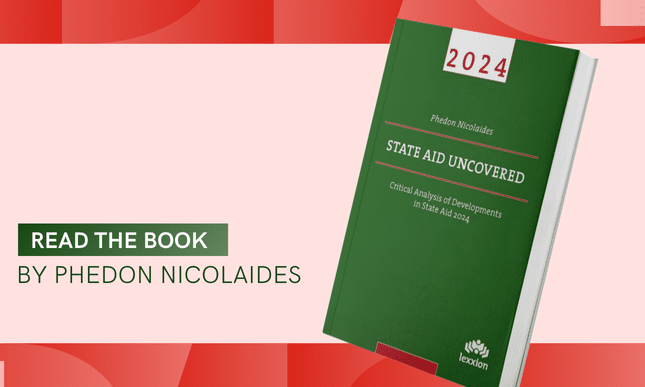
In Lexxions Blog „State Aid Uncovered” veröffentlicht Prof. Phedon Nicolaides wöchentlich kritische Analysen zu den neuesten Urteilen und Entscheidungen zu staatlichen Beihilfen. Jeder Beitrag stellt die wichtigsten Punkte eines Gerichtsurteils oder einer EU-Kommissionsentscheidung vor, ordnet sie in den Kontext ähnlicher Rechtsprechung oder Praxis ein, bewertet die zugrundeliegende Argumentation und zeigt etwaige Ungereimtheiten oder Widersprüche auf.

In loser Folge werden auf diesem Blog auch Gastbeiträge von anderen Experten für staatliche Beihilfen veröffentlicht, welche die Inhalte der Blogbeiträge ergänzen.

Jetzt abonnieren!

Professor at Maastricht University; Professor at University of Nicosia, and Academic Director at Lexxion Training

How to Determine whether State Aid Affects Trade

Article 107(1) requires the assessment of both the direct and indirect impact of a public measure on cross-border trade. The direct impact is the effect on the cross-border movement of products or customers of the aid recipient or of its competitors. The indirect impact is the effect on the cross-border movement of the aid recipient itself or its competitors.   […]

Imputability of an Aid Measure to the State Does not Require a Counterfactual

The fact that the state owns an undertaking is not enough to prove that the decisions of that undertaking can be attributed to the state. However, it is sufficient that the state was involved in the particular decision that transferred state resources for the benefit of another undertaking.   Introduction Several recent articles on this blog have examined the concept […]

The Legal Basis of the (In)compatibility of Aid Must be Clear

The European Commission may withdraw a decision, but before it adopts a new decision it must give an opportunity to interested parties to submit their comments, especially, if it changes the legal basis of the assessment of the compatibility of the aid.   Introduction The most frequent reasons for which the Commission finds aid to be incompatible with the internal […]

i) Transfer of State Resources, ii) Non-recovery of Incompatible Aid, iii) Primacy of Agricultural Policy over Competition Policy

Private resources that come under the control of a public authority become state resources. The only defence for not recovering incompatible aid is absolute impossibility. Agricultural policy objectives take precedence over those of competition policy. Introduction This article reviews a case involving transfer of state resources and a case concerning failure to recovery of incompatible State aid. It also draws […]

Existing v New Aid

Any alteration of an existing aid measure can affect the substance of the measure itself. A deviation from the conditions of authorisation may turn existing aid into new aid. Alteration or deviation from the conditions of authorisation that affect the compatibility of an existing aid measure, can result in the granting of new aid. A Member State that alters an […]

Indirect v Secondary Effects of State Aid

The prohibition of State aid in Article 107(1) of the Treaty applies both to the direct and indirect beneficiaries of aid. The direct and indirect beneficiaries are those who are intentionally targeted by the aid. Secondary effects are benefits which are inherent in an aid measure and which are not targeted at specific undertakings.   Introduction Public funding for the […]

Activities Linked to State Prerogatives

Economic activities which cannot be separated from the exercise of public powers cease to be economic in nature.   Introduction The dividing line between economic and non-economic activities is in a permanent state of flux. Although it is now clear that some activities fall within the powers and prerogatives of the state, while many others are carried out by the […]

Private Creditor Test

The Commission must apply the private creditor test even if a Member State does not request it or believes that it is not relevant.   Introduction Private investors always have two options: to invest or not to invest. They choose the option that generates the largest amount of profit or revenue. Similarly, private creditors also have two options: call in […]

State Resources and Imputability

When the state acts in its capacity as legislator it is not presumed to direct the resources of undertakings it owns and over which it can exercise dominant influence as a shareholder. Introduction On 13 September 2017, the Court of Justice replied to a request from a national court to advise it on the concept of state resources [case C‑329/15, […]

Pitfalls in the Use of De Minimis Aid

Calculating de minimis aid according to the average amount of aid received by undertakings is wrong. Introduction It appears that all Member States grant de minimis aid, even though some tend to grant it more easily than others. De minimis aid can be used to subsidise any costs, including those which are not eligible under other State aid rules. The […]

State Aid for R&D: What Is Research?

Adapting know-how for the needs of clients is not research. Aid for projects for which there is no demand is not in the common interest.   Introduction The purpose of research is to discover something new. But what is often difficult to define for public authorities that wish to stimulate more research activities is how new must be the outcome […]

State Aid for R&D: How Intermediaries Pass on Aid to Third Parties

Operators of research infrastructure do not benefit from State aid, if they fully pass on the aid to the users of the infrastructure. The amount of aid must be quantified. Introduction The beneficiaries of State aid to support R&D are normally those who carry out research. However, in the case of aid to research infrastructure there may be two categories […]

How to Calculate a Transparent Amount of State Aid in Public Guarantees

State aid granted in the form of public guarantees is transparent aid when it is calculated according to the methodology of the 2008 Commission notice or a methodology that is notified to and approved by the Commission.   Introduction Aid to farmers, small enterprises or revenue-generating projects is often given in the form of state guarantees. This is because what […]

The Scope of Public Service Obligations

Public service obligations may cover both profitable and unprofitable segments of the market.   Introduction 18 January 2017, the General Court delivered its judgment in case T-92/11 RENV, Jørgen Andersen, v European Commission.[1] Mr Andersen appealed against Commission Decision 2011/3 which concluded that public service contracts between the Danish Ministry of Transport and Danske Statsbaner [DSB], the incumbent train operator, contained […]

Financial Cooperatives

National courts may not question Commission decisions but they may ask the Court of Justice for guidance on how to interpret Commission decisions. Protection of shareholders of a particular category of companies is a selective measure. Introduction This is the last article dealing with the judgments that were rendered by EU courts on 21 December 2016. This article reviews the reply […]

Part II: Developments on the Concepts of Advantage and Selectivity

The advantage conferred by State aid is not necessarily equivalent to the economic benefit that is eventually enjoyed by aid recipients. Incompatible State aid has to be repaid regardless of whether it is passed on to the customers of the aid recipients. Undertakings derive an advantage when state intervention reduces the costs they would bear under “normal market conditions” whereby […]

Developments on the Concepts of Advantage and Selectivity

The advantage conferred by State aid is not necessarily equivalent to the economic benefit that is eventually enjoyed by aid recipients. Incompatible State aid has to be repaid regardless of whether it is passed on to the customers of the aid recipients. Undertakings derive an advantage when state intervention reduces the costs they would bear under “normal market conditions” whereby […]

Public Service Obligations and Award for Damages

Providers of public services must keep separate accounts. The parameters for calculating the compensation for the extra costs of public services must be determined in advance. Awards for damages do not constitute State aid. However, no damages can be awarded as a substitute for incompatible State aid.   Introduction It is often asked how compensation measures for public service obligations […]

Funding of the Spanish Public Broadcaster and Hypothecation of Taxes

Tax payers have grounds to object to a tax on the basis of Article 107(1) TFEU only when the tax is “asymmetrical” or when it is “hypothecated” to an aid measure.   Introduction On 10 November 2016, the Court of Justice ruled in case C‑449/14 P, DTS v European Commission.[1] DTS, a Spanish television company, appealed against the judgment of the General […]

5 most read articles by Phedon Nicolaides in 2016

Questions around selectivity of tax measures, the private creditor test, the new Commission Notice on the Notion of State Aid and many more have moved and shaped this year’s judgments on State aid. See which articles by Prof. Phedon Nicolaides were the most popular ones in 2016. We have also started an exciting new journey of State aid videos on […]

Sie möchten einen Beitrag einreichen oder zur Weiterentwicklung des Blogs State Aid Uncovered beitragen? Weitere Details finden Sie auf der englischsprachigen Seite.

Gastbeitrag einreichen

Abonnieren Sie unseren Newsletter für aktuelle Informationen zu Entwicklungen, Konferenzen, Seminaren und Veröffentlichungen in Ihrem Interessenbereich.

Newsletter: Jetzt abonnieren