


Europäisches Beihilfenrecht Blog

State Aid Uncovered Blog

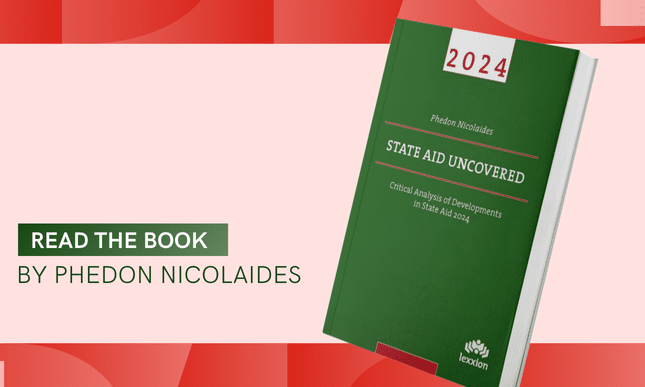
In Lexxions Blog „State Aid Uncovered” veröffentlicht Prof. Phedon Nicolaides wöchentlich kritische Analysen zu den neuesten Urteilen und Entscheidungen zu staatlichen Beihilfen. Jeder Beitrag stellt die wichtigsten Punkte eines Gerichtsurteils oder einer EU-Kommissionsentscheidung vor, ordnet sie in den Kontext ähnlicher Rechtsprechung oder Praxis ein, bewertet die zugrundeliegende Argumentation und zeigt etwaige Ungereimtheiten oder Widersprüche auf.

In loser Folge werden auf diesem Blog auch Gastbeiträge von anderen Experten für staatliche Beihilfen veröffentlicht, welche die Inhalte der Blogbeiträge ergänzen.

Jetzt abonnieren!

Professor at Maastricht University; Professor at University of Nicosia, and Academic Director at Lexxion Training

Public Service Obligations Must be Properly Defined and Selectivity Must be Proven [1]

Neither the existence of market failure, nor national laws that designate a service to be in the general interest can replace an official act that assigns to one or more undertakings clearly defined public service obligations.   Introduction The proper definition of public service obligations (PSOs) is an issue that arises with surprising regularity. It is surprising because numerous court […]

Unlimited State Guarantees

Unlimited state guarantees create a presumption that the recipient of the guarantee obtains an advantage in the form of cheaper credit. Any advantage in the form of lower risk in transactions with suppliers or clients has to be proven.   Introduction State guarantees must be limited in time and amount and may cover only a specified event. Unlimited and general […]

Ex ante Assessment of Future Profitability is Absolutely Necessary

A private investor assesses the prospects of future profitability before it invests. The burden of proof lies with the Member State that claims it has acted as a private investor.   Introduction The market economy investor principle is based on a simple premise: before you commit your money you need to check how much you are likely to get back. […]

The Compatibility of State Aid with the Internal Market: Lessons from “Hinkley Point C” – Part III

The objective of common interest that should be supported by State aid does not have to be an objective agreed by all Member States.   Environmental protection Austria argued that the Commission had ignored the potential negative effects of the aid on the environment such as the storing of nuclear waste. The reply of the Court was that “(516) in […]

The Compatibility of State Aid with the Internal Market: Lessons from “Hinkley Point C” – Part II

The objective of common interest that should be supported by state aid does not have to be an objective agreed by all Member States.   Existence of market failure and need for aid Austria and Luxembourg claimed that the intervention by the UK was not necessary and that there was no evidence that the liberalised market for the generation and […]

The Compatibility of State Aid with the Internal Market: Lessons from “Hinkley Point C” – Part I

The objective of common interest that should be supported by state aid does not have to be an objective agreed by all Member States.   Introduction On 12 July 2018, the General Court ruled in a complex case brought by Austria and Luxembourg against Commission decision 2015/658 which had authorised State aid for Hinkley Point C, a new nuclear power […]

Selectivity Can Exist at Different Levels: The Case of the Spanish Tax Lease System

A tax measure may be selective in relation to both intermediate and final beneficiaries.  An undertaking may enjoy a selective advantage even if it passes all tax benefits to other parties.   Introduction A measure that is not selective at one level may be selective at another level and a measure that is selective at one level can also be […]

Public Procurement and State Aid

State aid does not have to be awarded on the basis of a competitive procedure, unless the relevant rules require it. Secondary legislation may allow Member States to make direct awards without a prior competitive procedure. Public procurement rules do not apply to awards between contracting authorities.   Introduction   Public procurement and State aid rules have the same basic […]

Public Service Compensation

Compensation for the provision of public services may not exceed the avoidable cost minus any forgone revenue from not having to provide those services. The VAT exemption for postal services is not State aid because it is laid down in the EU VAT directive and therefore cannot be attributed to Member States.   Introduction This article reviews Commission decision on […]

The European Commission’s Code of Best Practices on State Aid Procedures

Closer cooperation between Commission services and Member States.   Introduction   The European Commission, DG Competition, published on 16 July 2018 on its website and then on 19 July 2018 in the Official Journal of the EU a Code of Best Practices for the Conduct of State Aid Control Procedures.[1]The purpose of the Code is to provide guidance to Member […]

i) Transfer of State Resources, ii) Non-recovery of Incompatible Aid, iii) Primacy of Agricultural Policy over Competition Policy

Private resources that come under the control of a public authority become state resources. The only defence for not recovering incompatible aid is absolute impossibility. Agricultural policy objectives take precedence over those of competition policy. Introduction This article reviews a case involving transfer of state resources and a case concerning failure to recovery of incompatible State aid. It also draws […]

Existing v New Aid

Any alteration of an existing aid measure can affect the substance of the measure itself. A deviation from the conditions of authorisation may turn existing aid into new aid. Alteration or deviation from the conditions of authorisation that affect the compatibility of an existing aid measure, can result in the granting of new aid. A Member State that alters an […]

Indirect v Secondary Effects of State Aid

The prohibition of State aid in Article 107(1) of the Treaty applies both to the direct and indirect beneficiaries of aid. The direct and indirect beneficiaries are those who are intentionally targeted by the aid. Secondary effects are benefits which are inherent in an aid measure and which are not targeted at specific undertakings.   Introduction Public funding for the […]

Activities Linked to State Prerogatives

Economic activities which cannot be separated from the exercise of public powers cease to be economic in nature.   Introduction The dividing line between economic and non-economic activities is in a permanent state of flux. Although it is now clear that some activities fall within the powers and prerogatives of the state, while many others are carried out by the […]

Private Creditor Test

The Commission must apply the private creditor test even if a Member State does not request it or believes that it is not relevant.   Introduction Private investors always have two options: to invest or not to invest. They choose the option that generates the largest amount of profit or revenue. Similarly, private creditors also have two options: call in […]

State Resources and Imputability

When the state acts in its capacity as legislator it is not presumed to direct the resources of undertakings it owns and over which it can exercise dominant influence as a shareholder. Introduction On 13 September 2017, the Court of Justice replied to a request from a national court to advise it on the concept of state resources [case C‑329/15, […]

Pitfalls in the Use of De Minimis Aid

Calculating de minimis aid according to the average amount of aid received by undertakings is wrong. Introduction It appears that all Member States grant de minimis aid, even though some tend to grant it more easily than others. De minimis aid can be used to subsidise any costs, including those which are not eligible under other State aid rules. The […]

The Necessity and Proportionality of Regional Aid

The Commission must open the formal investigation procedure when it has serious doubts about the compatibility of State aid. The aid that is necessary to induce a company to locate its investment in an assisted region is the amount that covers the difference in costs between the assisted region and the best alternative location. This amount is also proportional.   […]

Odysseus and the Sirens: A Rational Market Operator Can Agree to be Bound by the Ruling of an Arbitration Tribunal

A rational market operator can agree to arbitration if there is no reasonable prospect of a better outcome. However, a rational operator would ensure that the terms according to which an arbitration decision can be taken would be defined in advance and would not be prejudicial to the operator.   Introduction Is it rational for a market operator to agree […]

Calculating the Amount of State Aid in a 100% Public Guarantee

The proxy rates in the Commission Notice on Guarantees cannot be used in cases of state guarantees that cover 100% of the underlying loans.   Introduction Last week’s article reviewed the terms of the operation of regional airports in Greece. (View it here). This week’s article continues with the theme of management of public infrastructure and examines Commission decision SA.42545 on […]

Sie möchten einen Beitrag einreichen oder zur Weiterentwicklung des Blogs State Aid Uncovered beitragen? Weitere Details finden Sie auf der englischsprachigen Seite.

Gastbeitrag einreichen

Abonnieren Sie unseren Newsletter für aktuelle Informationen zu Entwicklungen, Konferenzen, Seminaren und Veröffentlichungen in Ihrem Interessenbereich.

Newsletter: Jetzt abonnieren